
Competitive Picks · Updated October 2026
Best Pickleball Paddles for Competitive Players (2026)
Competitive play — 5.0+, open tournament brackets, pro-am events — demands a different set of specs than recreational or club-level 4.0 play. Swing weight above 119, premium grit that holds up through multi-day events, and twist weights that hold the line on off-center attacks are the benchmarks. These are the paddles used by players who play to win, not just to improve. Every pick below is verified by Austin's hands-on testing with lab-measured numbers to match.
Top 5 Pickleball Paddles for Competitive players

Mint
Mint Mon Ami
Elongated · 18mm · $179.99 (15% off)
SW 123.47 is the highest swing weight we've measured in the entire database — period. The Mon Ami's 18mm core is unusual at this price ($179.99), and the combination of extreme swing weight with a softer 18mm feel creates a paddle that punishes attackers and absorbs pace simultaneously. For competitive players who win by dictating tempo with heavy groundstrokes, the Mon Ami delivers a unique physical advantage no other paddle currently matches.
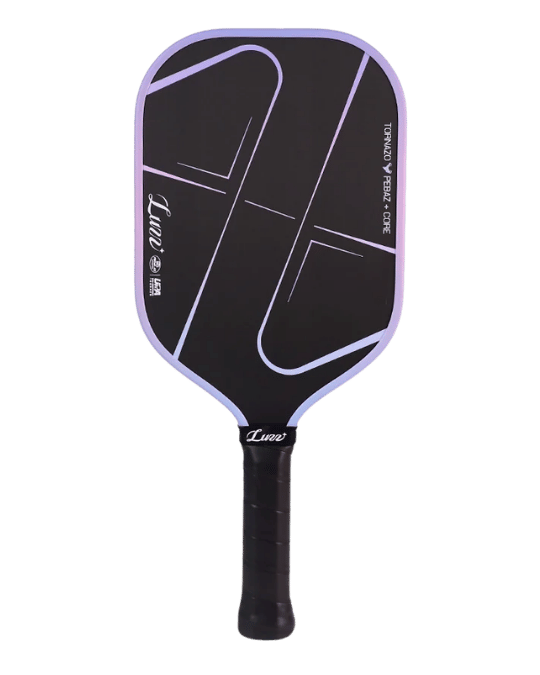
Luzz
Luzz Tornazo
Elongated · 16mm · $229.00 (15% off)
SW 121.89 in a 16mm elongated build — the Tornazo balances the high swing weight of a power paddle with the touch-friendly 16mm core that competitive players need to convert half-volleys and reset under pressure. TW 6.11 is competitive. Luzz paddles are built for the upper-level game and priced without the brand premium you'd pay at Selkirk or JOOLA. At $229.00 with PLAYBOOK, the Tornazo is the best value at the competitive price point.
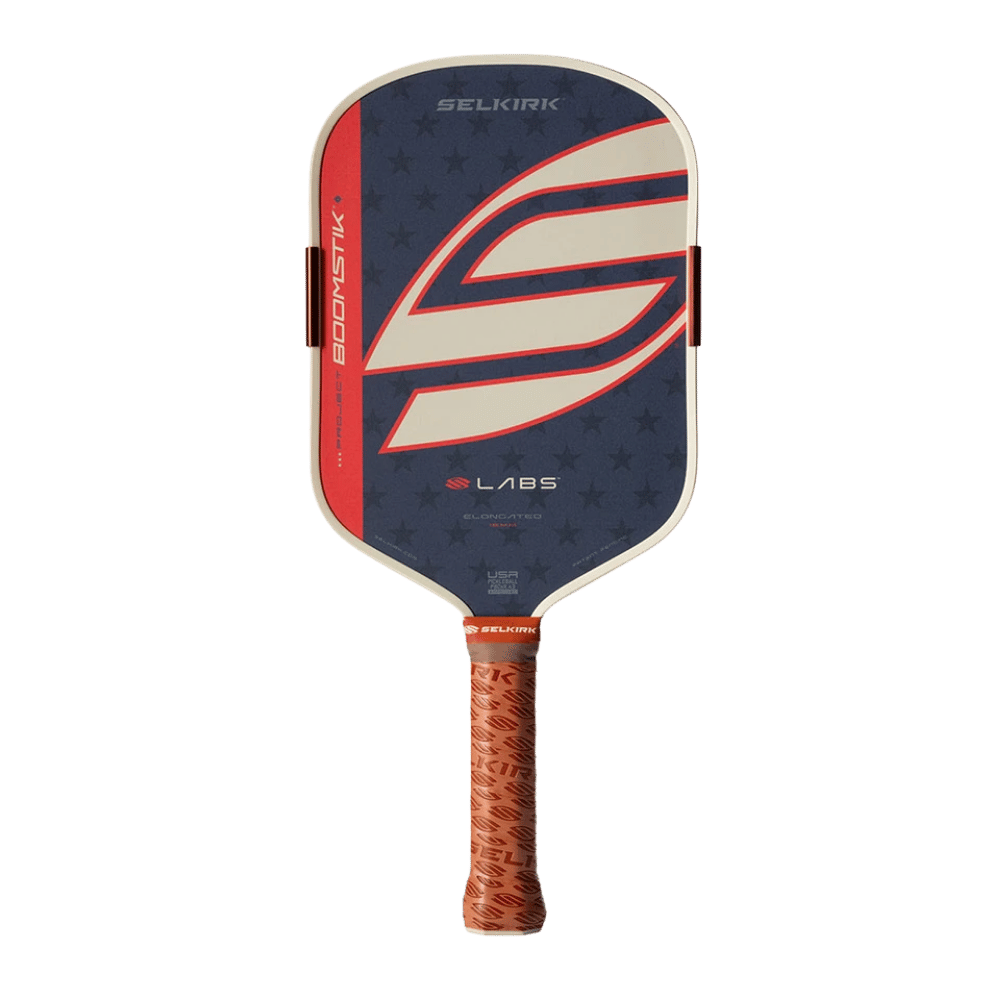
Selkirk
Selkirk Boomstik
Elongated · 16mm · $332.99 (15% off)
TW 6.84 is the standout competitive spec — the Boomstik resists rotation on off-center hits better than every other paddle on this page. In competitive play, opponents constantly attack your body and corners to generate paddle-twist errors. The Boomstik eliminates that vulnerability. SW 120.09 gives you the mass to handle pace without deflecting. This is Selkirk's most tournament-competitive elongated build. $332.99 with PLAYBOOK.
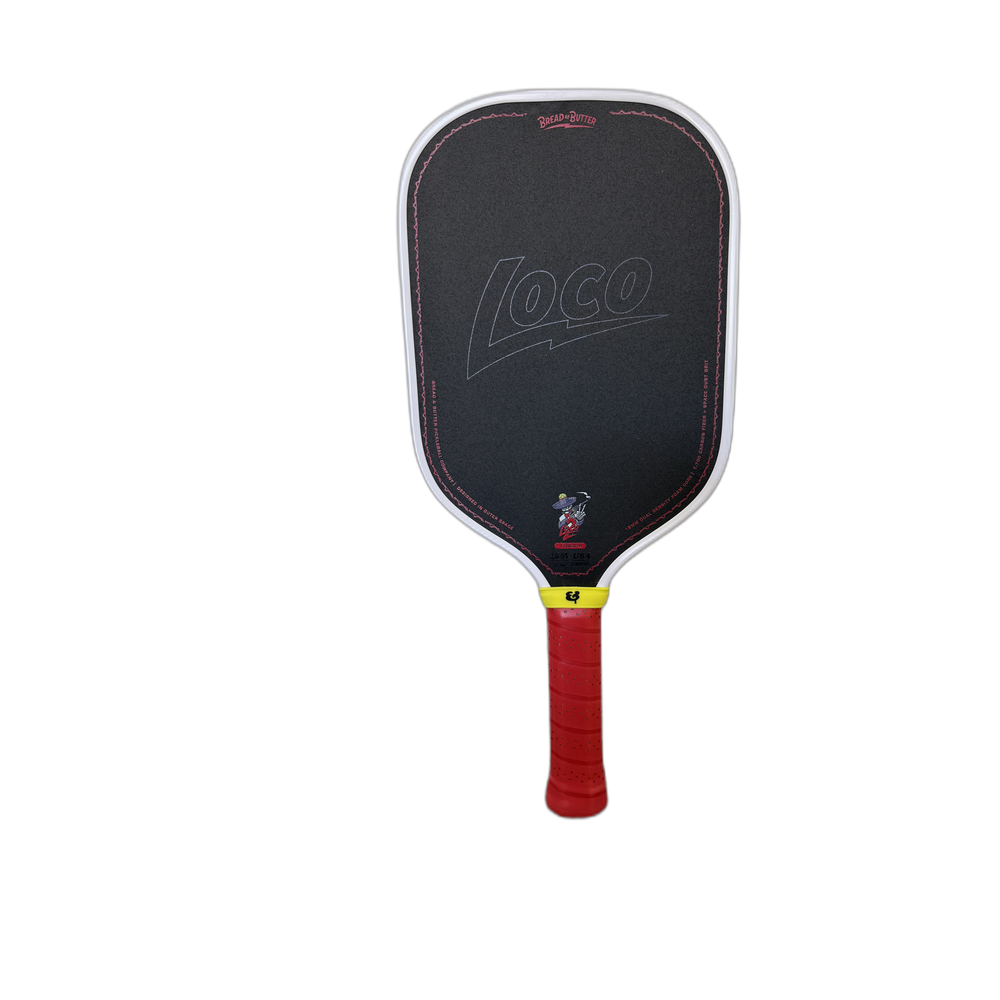
Bread & Butter
Bread & Butter Loco 2
Elongated · 16mm · $220.00 (10% off)
Austin's S-tier pick for advanced play. SW 119.14 with Space Dust Grit puts the Loco 2 in the conversation for any competitive format — baseline drives, spin third shots, kitchen resets. It's versatile in a way that single-dimension paddles aren't. TW 6.20 is accurate enough for competitive play. At $220 with code PLAYBOOK, it sits at the intersection of top-tier performance and reasonable tournament-level investment.
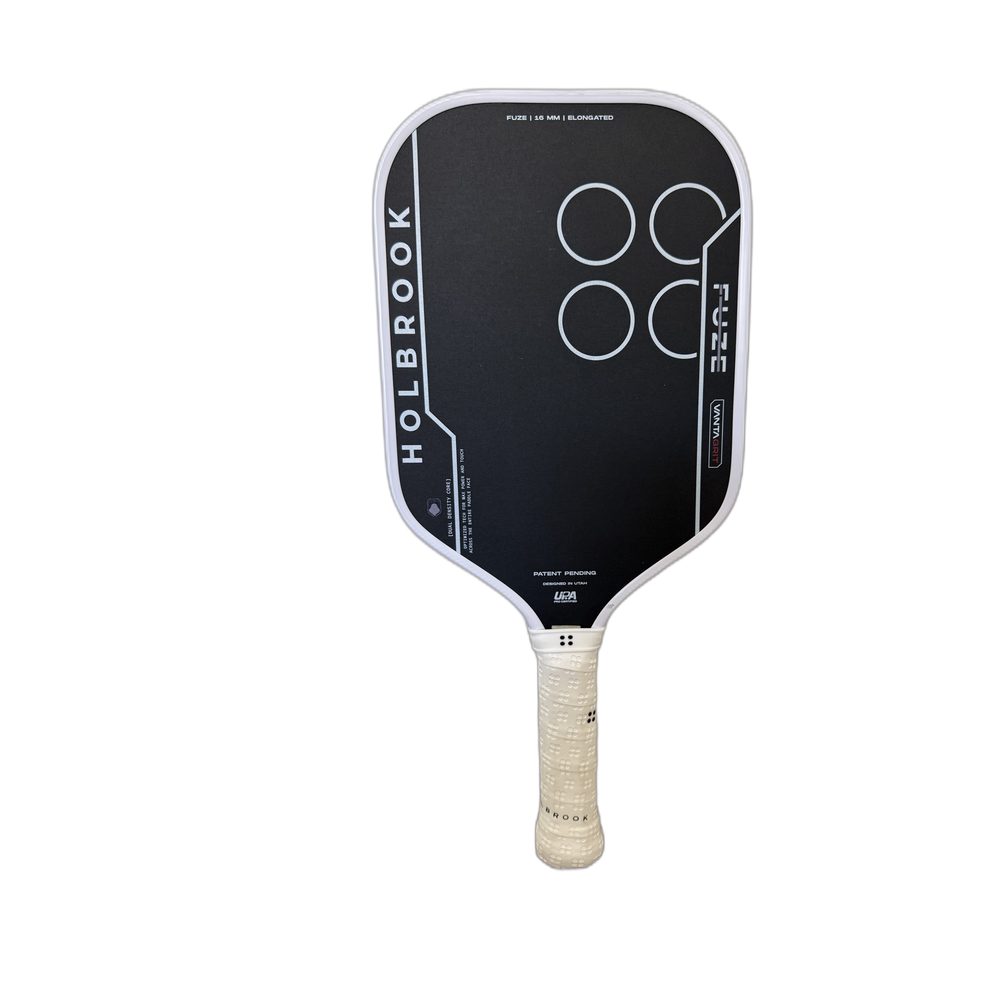
Holbrook
Holbrook Fuze Vantagrit
Elongated · 16mm · $229.99 (15% off)
For players whose competitive edge is spin manipulation — heavy topspin serves, slice approaches, roll volleys — the Fuze Vantagrit at SW 119.71 with VantaGrit surface is the most purpose-built spin weapon in the competitive tier. VantaGrit maintains its texture through a multi-day tournament, which matters when your grit-dependent game faces three to five rounds. $229.99 with PLAYBOOK.
Get more picks for competitive players in your inbox
Weekly paddle reviews, exclusive discount codes, and what's worth buying — straight to your inbox.
Unsubscribe anytime · No spam · Free forever
What separates competitive paddles from club paddles
Swing weight above 119 is the competitive threshold. At 5.0+ and open brackets, rally pace is fast enough that lower-SW paddles feel deflected by incoming balls. A paddle at SW 121+ holds its line on fast-paced exchanges and absorbs pace without the head bouncing off the ball. This isn't a marginal difference — it's the reason most tournament players gravitate toward SW 119–124.
Surface durability is a tournament requirement, not a preference. Club-level players replace paddles every year or two. Competitive players can burn through a grit surface in months of hard hitting. VantaGrit and Space Dust Grit are the standout surfaces for durability under high-volume play. Avoid paddles with unspecified "raw carbon" surfaces if you play more than 4 times per week.
Twist weight determines error rate under pressure. In competitive play, you get fewer "easy" contact points than at the recreational level. Opponents attack your body, force awkward reaches, and target the edges of your sweet spot. Higher twist weight (6.5+) dramatically reduces the variance on these shots. The Selkirk Boomstik at TW 6.84 is the most forgiving competitive paddle in this specific metric.
USAP approval matters for sanctioned events. If you're playing APP, PPA, or USAP-sanctioned tournaments, you need an approved paddle. Every pick on this page is USAP-approved except the Mint Mon Ami — verify the current approval list at usa.org before your next tournament.
Common Questions
FAQ
What's the best pickleball paddle for competitive players?
The Selkirk Boomstik (TW 6.84, SW 120.09) is the most tournament-ready paddle on this list for NVZ consistency and off-center error reduction. For raw power, the Mint Mon Ami (SW 123.47, highest in the database) is unmatched. Austin's versatile S-tier pick for competitive all-around play is the Bread & Butter Loco 2 Elongated.
What swing weight do competitive pickleball players use?
Most competitive players (5.0+, open bracket) play with SW 119–124. Below 117, paddles feel light against fast-paced incoming balls. Above 124, hand speed at the NVZ begins to suffer even for elite players. The 119–123 range is the practical competitive window.
Should competitive players use 14mm or 16mm paddles?
Both work at the competitive level. 16mm is preferred for players who rely on touch, resets, and kitchen control — the softer core gives more dwell time. 14mm is preferred for attackers who want a crisper, faster pop and are willing to sacrifice a bit of feel. Most 5.0 players gravitate toward 16mm for its versatility.
What paddle does a 5.0 pickleball player use?
5.0 players tend to use elongated paddles in the SW 119–124 range with premium grit surfaces (raw carbon, ArmorGrit, VantaGrit). The Selkirk Boomstik, Bread & Butter Loco 2, and Luzz Tornazo are all used at 5.0 and open tournament level. Budget is less of a concern — these players invest in their equipment.
Drills · Training · Tips
Train Smarter, Hit Harder
Drills Guide
The 20 Best Pickleball Drills (For Every Skill Level) — 2026 Guide
Drilling is what separates 3.5 players from 4.5 players. Not playing more, drilling more. Here are the 20 most effective pickleball drills we've tested — sorted by shot type — with solo, partner, and ball machine variations for every level.
Training Guide
How to Get Better at Pickleball (Fast): A Pro-Backed 4-Step System
Most players try to get better by playing more. Tour pros get better by drilling more. The 4-step system below is what actually works at 3.0, 3.5, 4.0, and 4.5 — and the only one tested across 100+ rec players who've used it to climb a rating in 90 days.
Training Guide
How to Hit a Perfect Third-Shot Drop in Pickleball (Step-by-Step)
The third-shot drop is the most important shot in pickleball above 3.0 — and the one most rec players skip drilling. Here's the step-by-step: grip, contact, swing path, drills, and when to drive instead.
Drills Guide
The 8 Best Pickleball Drills for Beginners (Where to Start)
If you're new to pickleball, drilling matters more than playing. The 8 drills below cover the foundational shots — dink, drop, serve, return, reset — and the footwork that holds them together. Run these before you ever add a fancy shot to your game.
Looking for paddles at every price point?
See All Best Pickleball Paddles