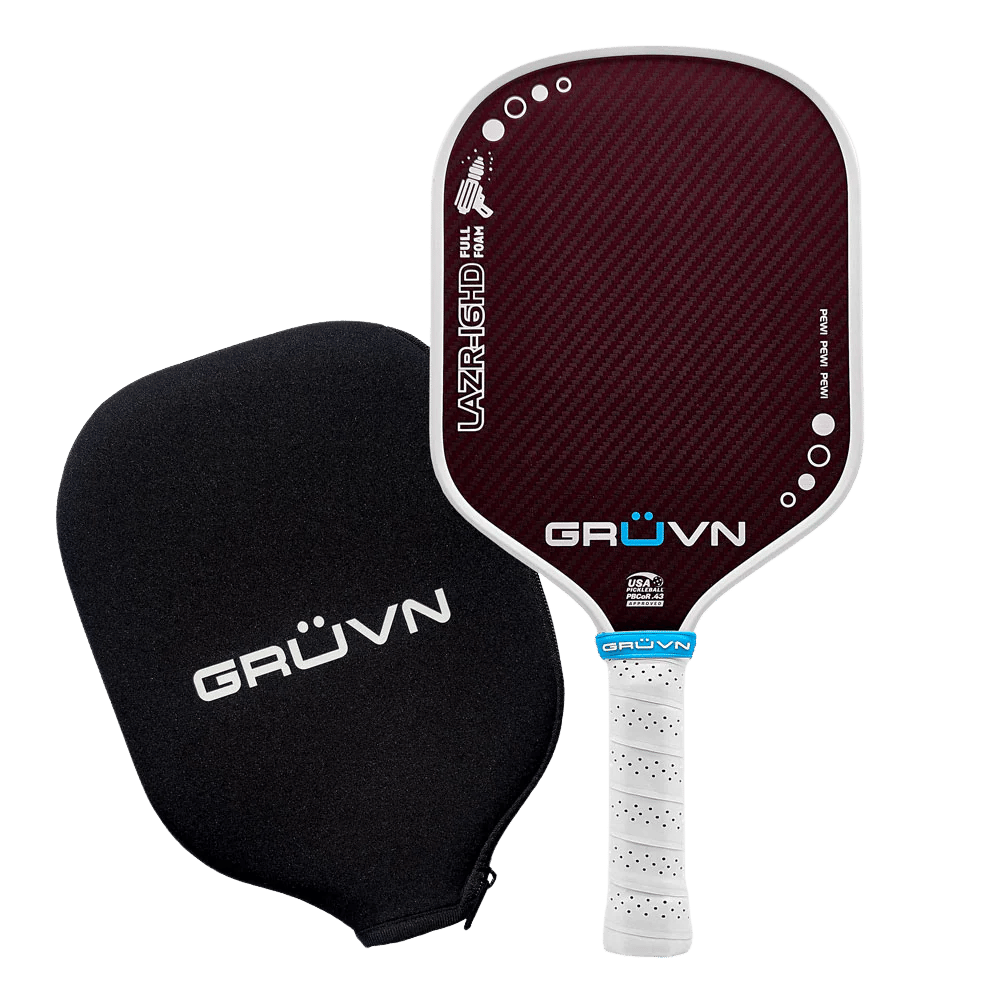
Pickleball paddles are consumables, not heirlooms. Even the best ones lose performance over months of play — first slowly (grit fading), then sometimes suddenly (core crush or dead spots). The honest lifespan numbers below are based on competitive recreational play (3–5 sessions per week, ~2 hours each). Casual players (1–2 sessions per week) can roughly double these numbers.
Typical Lifespan by Construction
| Construction | Active Lifespan | What Fails First |
|---|---|---|
| Thermoformed honeycomb (Gen 2) | 8–14 months | Core crush, then grit fade |
| Thermoformed honeycomb (Gen 3, refined) | 12–18 months | Grit fade, occasionally edge cracks |
| Foam core | 18–30 months | Grit fade — the core itself rarely fails |
| Kevlar face | 18–30 months | Eventually edge wear; grit lasts much longer than carbon |
| Cold-pressed (Gen 1) | 24–36+ months | Edge bumper wear, then grit fade; cores rarely fail |
What "Dies" Actually Means
A dead paddle doesn't usually crack or visibly fall apart. The two real failure modes:
- Core crush: the honeycomb cells in a small area collapse from repeated hard impacts, creating a dead spot you can feel and sometimes hear (a duller "thunk" instead of the usual pop)
- Grit fade: the face's surface texture polishes smooth, killing spin generation
- Delamination: the face starts separating from the core (visible as a bubble or ripple in the face)
- Edge cracks: small cracks in the unibody perimeter, more common on thermoformed paddles
What Speeds Up the Death
- Hot car storage (above 100°F) — softens adhesives and can cause delamination
- Cold outdoor play (below 35°F) — makes the face brittle and more prone to core crush
- Bouncing the paddle on the court between points — repeated low-energy impacts add up
- Hitting the ground or net during the swing — even glancing blows damage the edge
- Slamming the paddle in frustration — surprisingly common cause of edge cracks
The 12-Month Rule
For most competitive players, the 12-month mark is when it's worth checking your paddle honestly. Run your fingernail across the face — is the texture noticeably smoother than a brand-new paddle? Tap the face all over — does any spot sound different? If yes to either, you're due for a replacement. Paddles don't ask to be retired; you have to retire them.
Bottom Line
Plan to replace a competitive paddle every 12–18 months, regardless of how good it still looks. Foam core and Kevlar paddles can stretch to 24+ months. The performance drop is gradual, so the best signal is comparing your paddle directly to a new demo — if the new one feels noticeably crisper, your old one is past its prime.