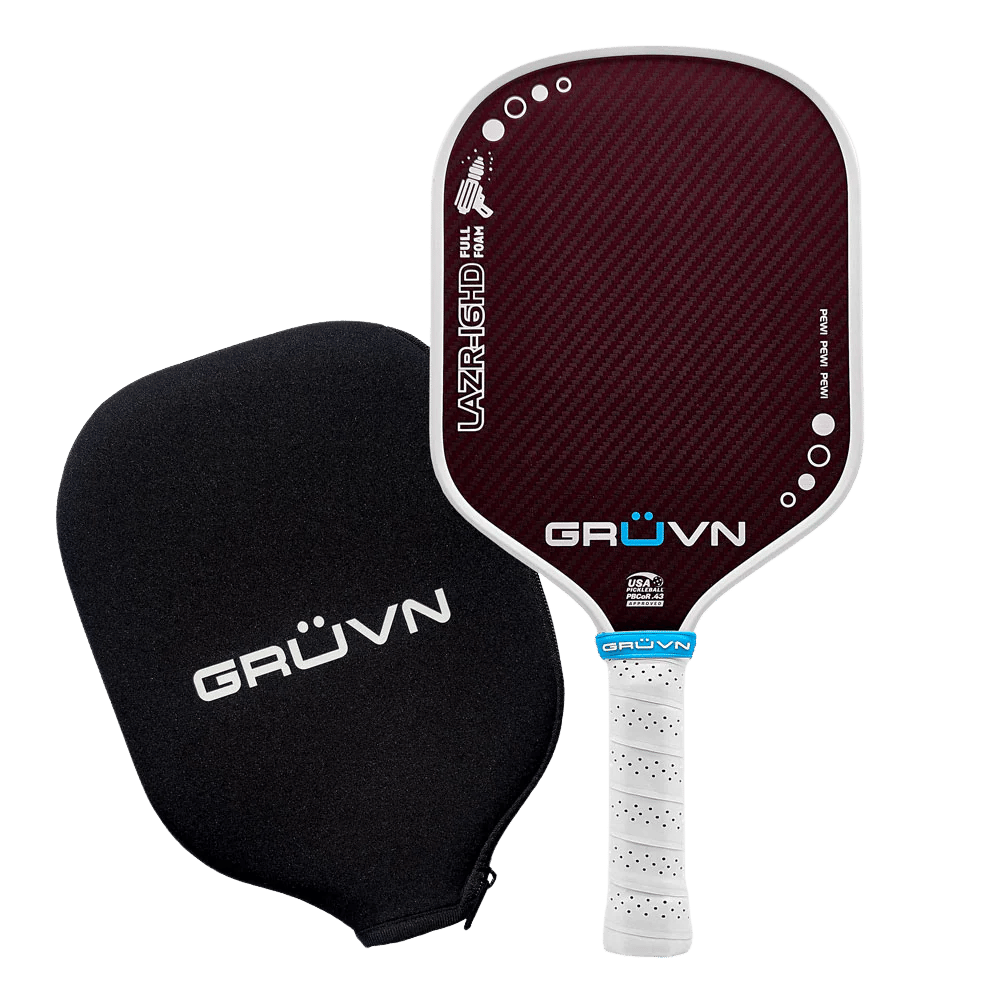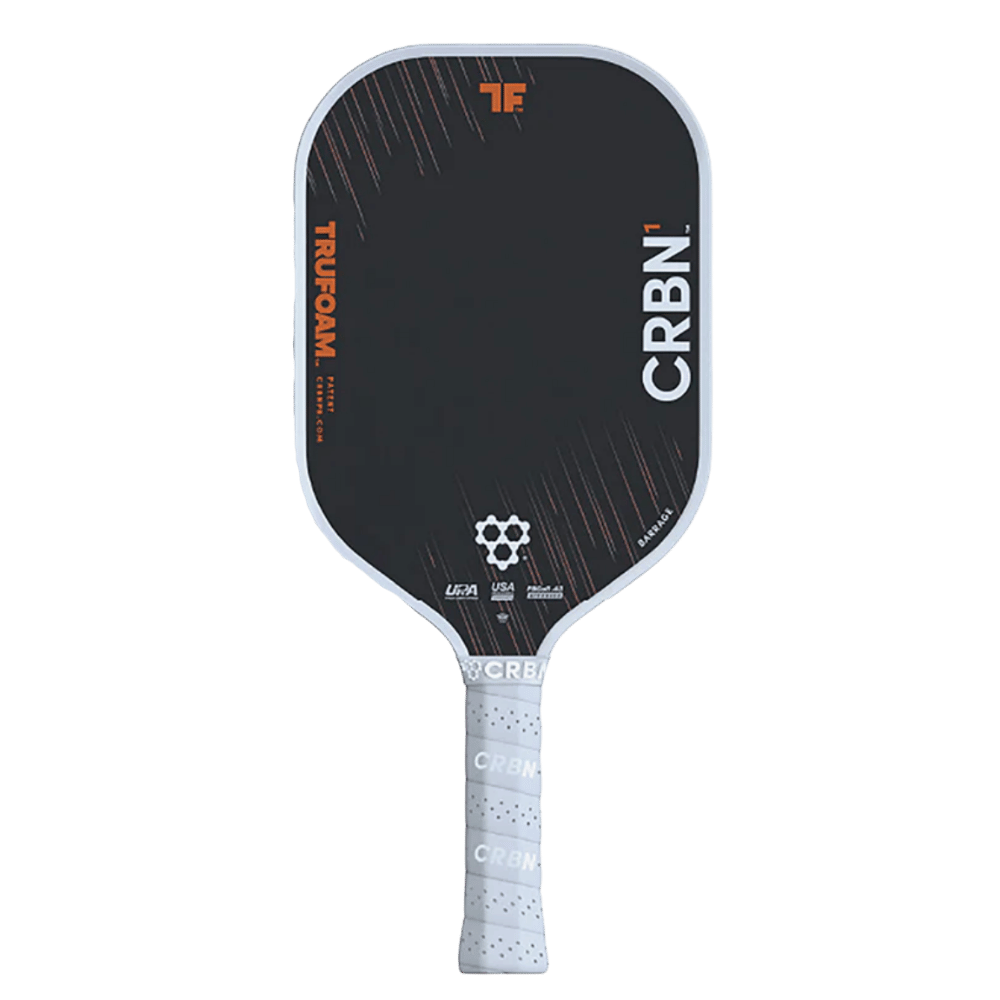
A foam core pickleball paddle uses solid (or near-solid) EPP, PP, or proprietary polymer foam in place of the honeycomb structure that's been standard for a decade. Foam cores produce a noticeably different feel — softer at contact, quieter on the swing, and surprisingly powerful on drives — and the technology has spread fast across the price spectrum, from $129 budget paddles to $279 flagships.
How Foam Cores Differ from Honeycomb
Traditional polypropylene honeycomb has hollow hexagonal cells that compress and rebound on contact. Foam cores are continuous solid material — typically high-density EPP (expanded polypropylene) or a similar closed-cell foam. Honeycomb deflects more on contact (more pop on drives, more launch on soft shots). Foam absorbs more energy (softer feel, less launch, easier resets), then releases it more linearly on harder swings (which is why foam paddles still hit huge on drives despite feeling soft on dinks).
What Foam Cores Feel Like
- Quieter on every shot — both at impact and in the swing through the air
- Softer, more "plush" feel at contact, particularly noticeable on dinks and resets
- Surprisingly explosive on drives and putaways — the energy comes out at higher swing speeds
- Larger effective sweet spot (off-center hits don't pop up as harshly)
- Less "trampoline" effect, which can take getting used to if you're coming from a thin honeycomb paddle
Durability — Foam's Biggest Win
The honeycomb structure in traditional paddles is the part that fails first. Core crush — where the hexagonal cells collapse from repeated hard impacts — kills more paddles than any other failure mode. Foam cores can't crush in the same way; they're solid. That's why brands marketing foam paddles often pair them with 2-year or lifetime warranties, where honeycomb paddles ship with 6 months or a year.
The Trade-Off
Foam cores are heavier per cubic inch than honeycomb, so foam paddles tend to land 0.1–0.3 oz heavier than honeycomb equivalents. That can push some foam paddles into the high-swing-weight range, which is great for power but harder on the shoulder over long sessions. Foam paddles also cost more to manufacture, so prices skew $30–60 higher than comparable honeycomb.
Bottom Line
If you want a paddle that hits big, sounds quiet, and lasts longer than a honeycomb paddle would, foam core is the play. The Speedup Tide, Gruvn LAZR, Friday Aura Pro, and CRBN TruFoam Barrage are all examples of foam paddles that have changed how their owners think about durability.