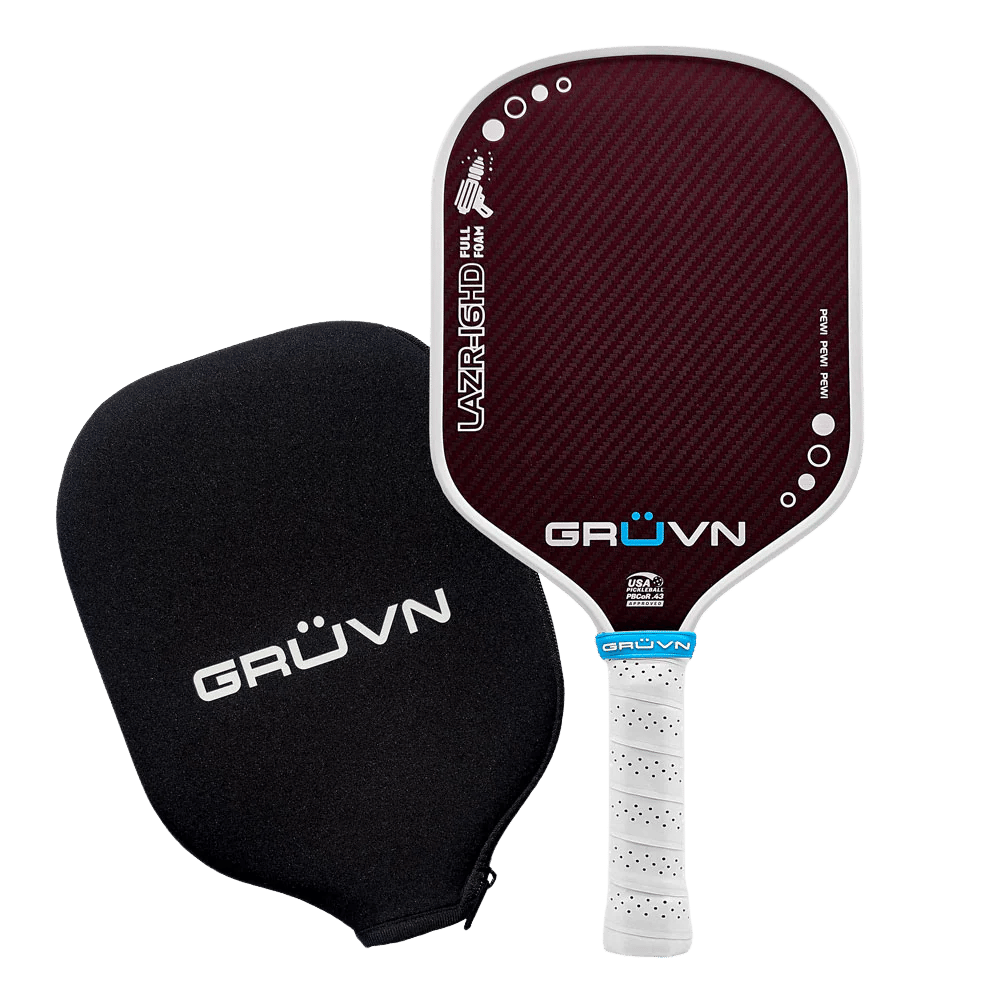
Core crush is the most common pickleball paddle failure mode. It happens when the honeycomb cells in the paddle's core collapse from repeated impacts in the same area. You'll know it has happened because that area of the paddle will hit duller, sound flatter, and feel "dead" — the energy that used to bounce back to the ball is now absorbed by the broken cells underneath.
What's Actually Happening Inside the Paddle
Modern paddle cores are polypropylene honeycomb — a structure of hexagonal cells that compress slightly on contact and rebound. Each impact applies stress to the cell walls. Over thousands of impacts, the cell walls in heavily-hit areas (typically the center sweet spot) fatigue and collapse. Once collapsed, they don't rebound — the area becomes a dead zone.
Why Thermoformed Paddles Crush Faster
Thermoformed paddles eliminated the foam edge bumper that used to absorb perimeter energy. That made the paddle hit harder but also pushed more stress into the core itself. Combined with stiffer face materials that flex less and transmit more impact, thermoformed paddles tend to develop core crush faster than the cold-pressed paddles they replaced — often within 8–14 months of competitive play, versus 24+ months for old-style paddles.
How to Detect Core Crush Early
- Tap the face with your knuckle systematically — top, middle, throat, and edges, both sides.
- Listen carefully to the sound at each spot. A healthy paddle has a consistent, crisp pop everywhere.
- If any area sounds duller, more hollow, or more muted, that's incipient core crush.
- Compare to a brand-new paddle of the same model if you have access to one — the contrast is usually obvious.
- Visual check: shine a light across the face at low angle. Look for any subtle depressions or texture changes.
Can Core Crush Be Prevented?
Slowed, not prevented. The cells will fatigue eventually. But you can extend paddle life by:
- Avoiding storage above 100°F or below 35°F — temperature cycling stresses the core
- Not bouncing the paddle on the court between points (yes, this counts)
- Not hitting the paddle on hard objects, even glancingly
- Rotating two paddles in heavy training so neither hits its lifetime cycles too quickly
- Choosing a foam core paddle from the start — foam doesn't crush the way honeycomb does
Once Core Crush Starts, It Spreads
A dead spot is rarely permanent in just one location. Once cells start failing, the surrounding cells take more of the impact load on subsequent hits — which accelerates their failure. Most paddles go from "one slightly dull spot" to "large dead zone in the center" in 2–6 weeks of continued play. Replace the paddle when you first notice the change; don't wait for it to spread.
Foam Cores: The Crush-Proof Alternative
Solid foam cores can't crush the way honeycomb cells can. There are no hollow cells to collapse — the material is continuous. That's the single biggest durability advantage of foam paddles. If you've replaced one or two paddles to core crush already, your next paddle should probably be foam.
Bottom Line
Core crush is the most common reason competitive paddles die. The honest fix is replacement — there's no aftermarket repair. The honest prevention is buying a foam core paddle (which can't crush) or accepting a 12–18 month replacement cycle on honeycomb paddles. Check your face every few weeks; catching a developing dead spot early is the best you can do.