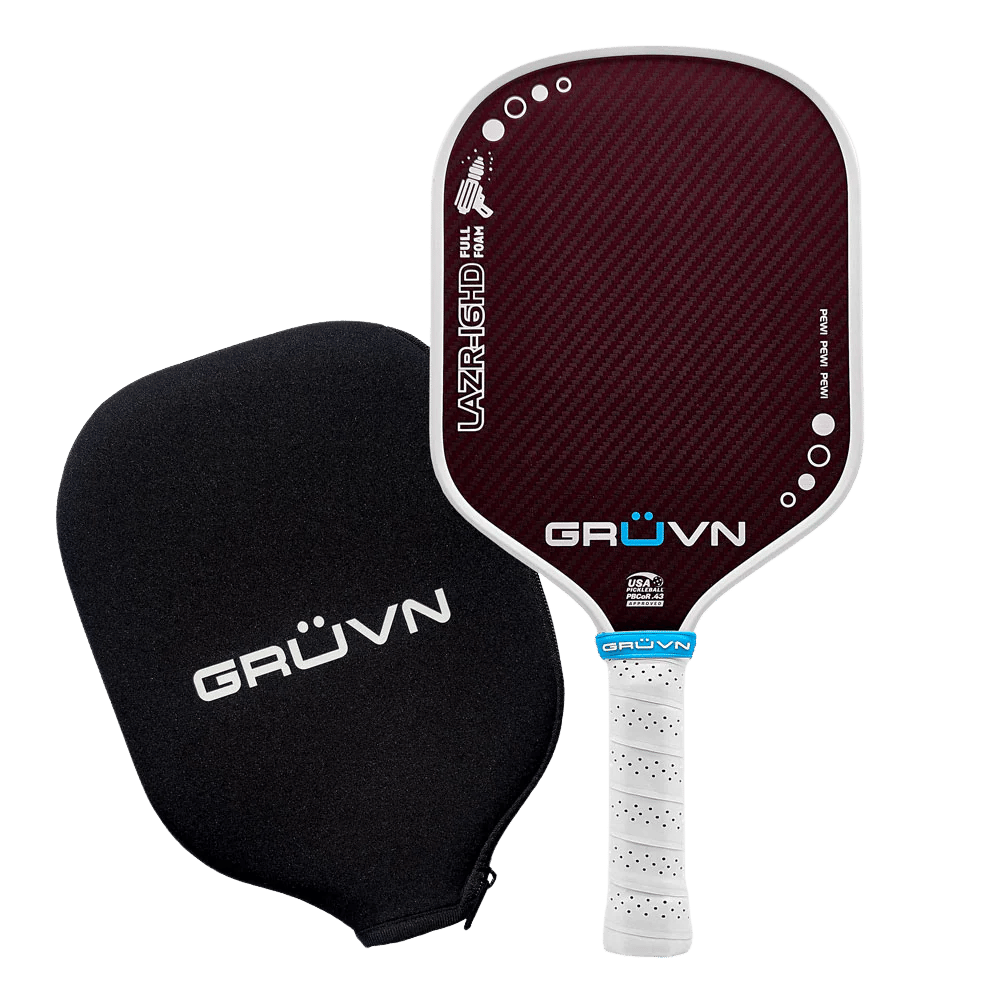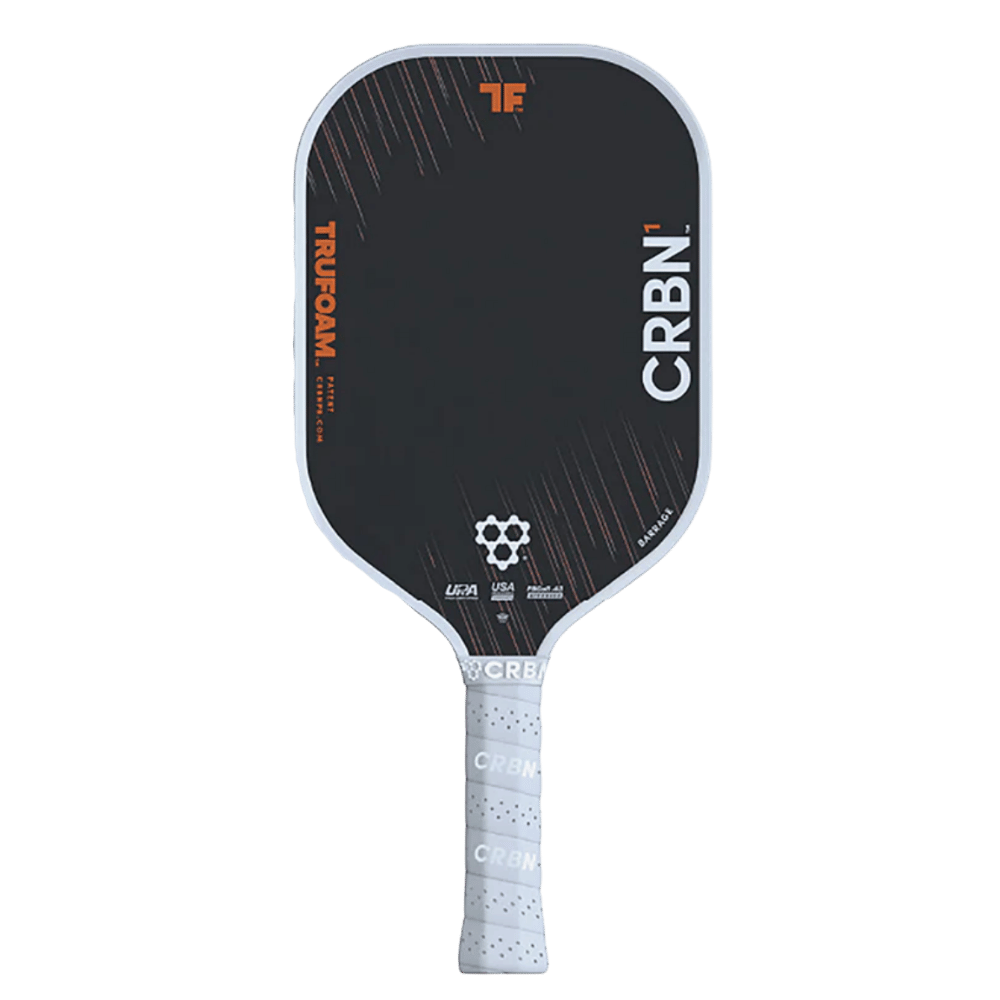
Polymer honeycomb has been the standard pickleball paddle core for over a decade. Foam cores (typically high-density EPP or proprietary polymer foam) are the challenger. The comparison isn't as simple as "newer = better" — both constructions have legitimate advantages, and the right choice depends on what you value in a paddle.
Side-by-Side
| Property | Honeycomb Core | Foam Core |
|---|---|---|
| Feel at contact | Crisp, energetic | Soft, plush, quiet |
| Pop on drives | Slightly more (at low swing speeds) | Slightly less low / equal-or-more high |
| Reset and dink feel | Can pop up under hard incoming pace | More absorption, easier resets |
| Sweet spot | Smaller, more punishing on miss-hits | Larger effective area |
| Noise | Louder "crack" sound | Quieter, more dampened |
| Durability | Core crush is the main failure | Far more resistant to crush |
| Lifespan | 8–18 months competitive | 18–30 months competitive |
| Weight | Lighter per cubic inch | Heavier per cubic inch |
| Price | $80–280 range | $130–280 range |
Where Foam Wins
- Durability — solid foam can't crush the way hollow honeycomb cells can
- Quiet — significantly less noise on contact, important for HOA-restricted communities
- Sweet spot — softer face spreads impact over more area, more forgiving on miss-hits
- Soft hands play — dinks and resets feel plush and predictable
- Hot-day performance — foam is less sensitive to temperature than thin-walled honeycomb
Where Honeycomb Wins
- Pop on hard drives at low swing speeds — the trampoline effect favors honeycomb
- Lighter paddles — honeycomb structures weigh less per volume than foam
- Established feel — players coming from previous-gen paddles will find the transition easier
- Lower price — entry-level paddles still use honeycomb almost exclusively
- Whip-through hand speed — lighter cores translate to faster hand battles
The Noise Factor
Foam paddles are dramatically quieter than honeycomb. Many HOAs and noise-sensitive communities that have banned pickleball cite paddle noise specifically — and foam paddles are often the workaround that lets play continue. If you play in any environment where noise complaints are a real factor, foam should be a serious consideration regardless of other specs.
Which to Buy
If you prioritize: durability, soft-hands play, larger sweet spot, or quieter sound → foam. If you prioritize: lightest possible swing weight, snappy traditional feel, lowest possible price → honeycomb. For most all-court intermediate players, foam now offers more upside than downside.
Bottom Line
Foam core is the safer long-term bet for most players in 2026. The durability advantage alone usually justifies the price premium, and the quieter feel is a real bonus. Honeycomb still wins for players who specifically want the snappiest, lightest, lowest-cost option.