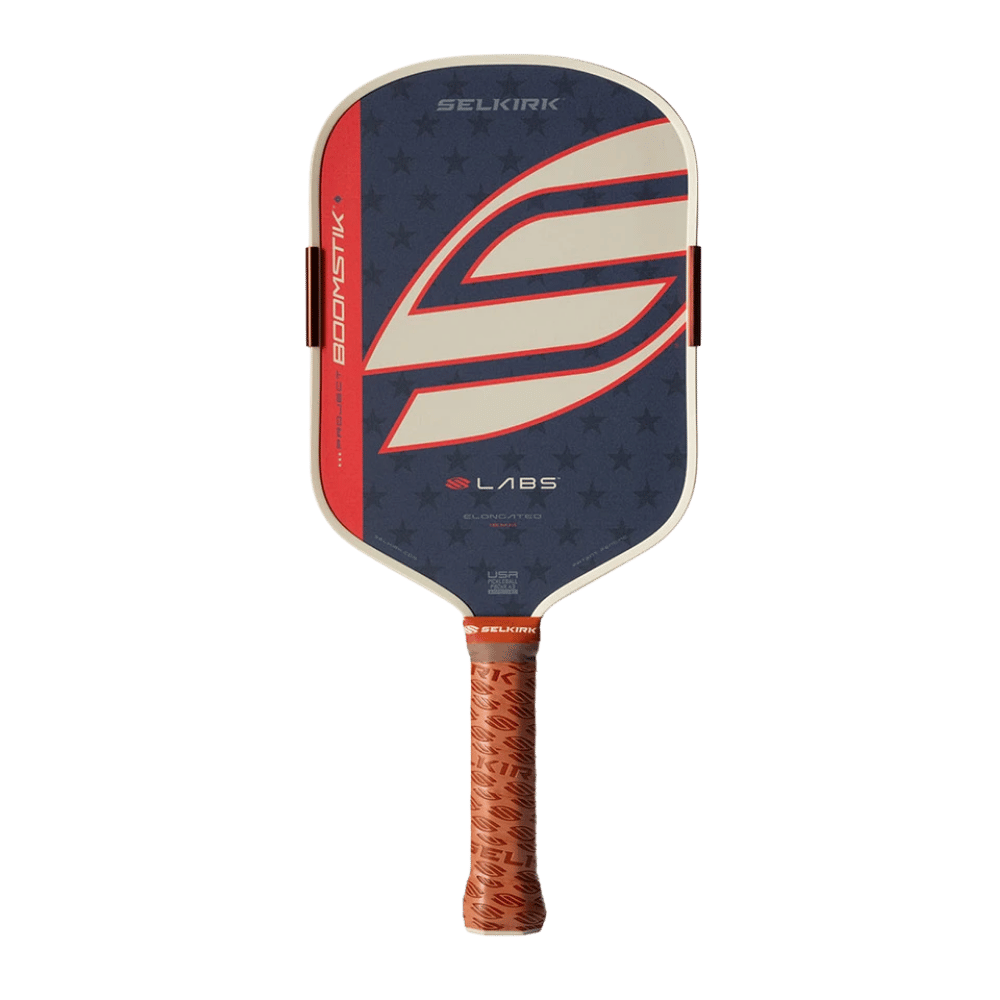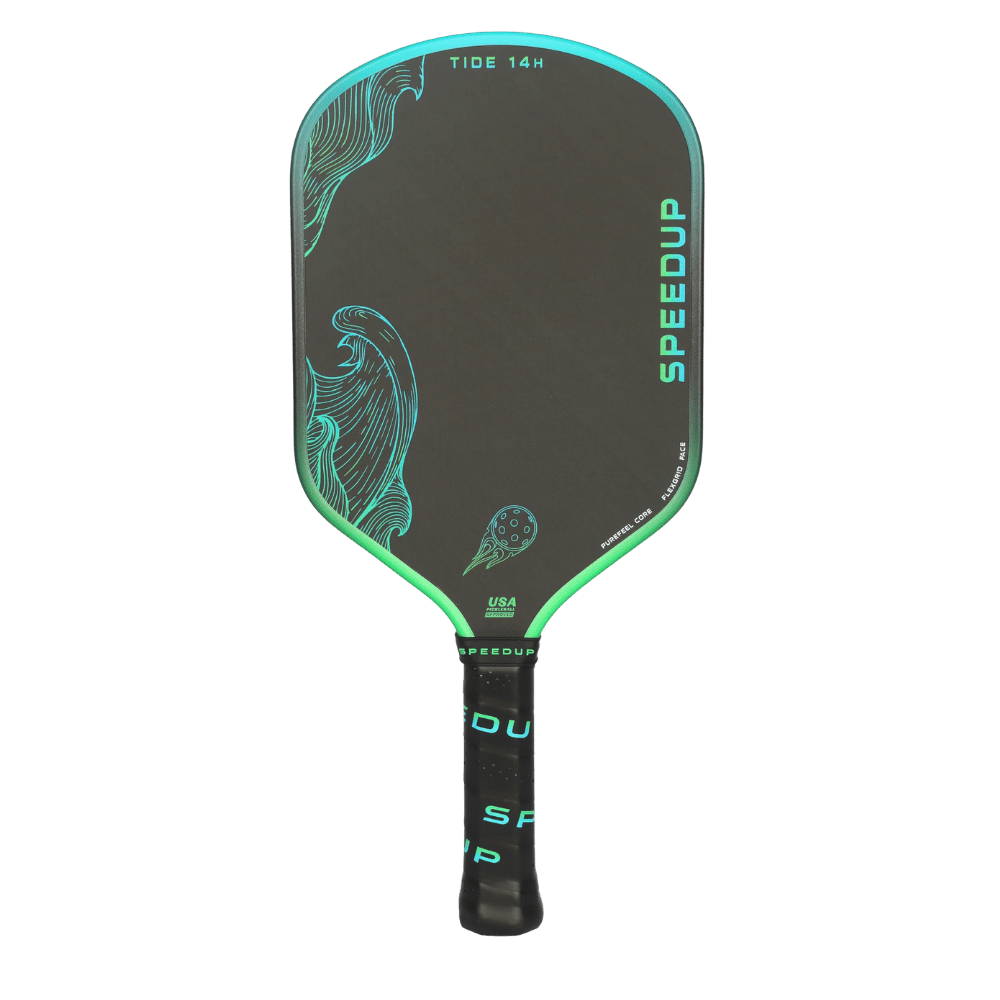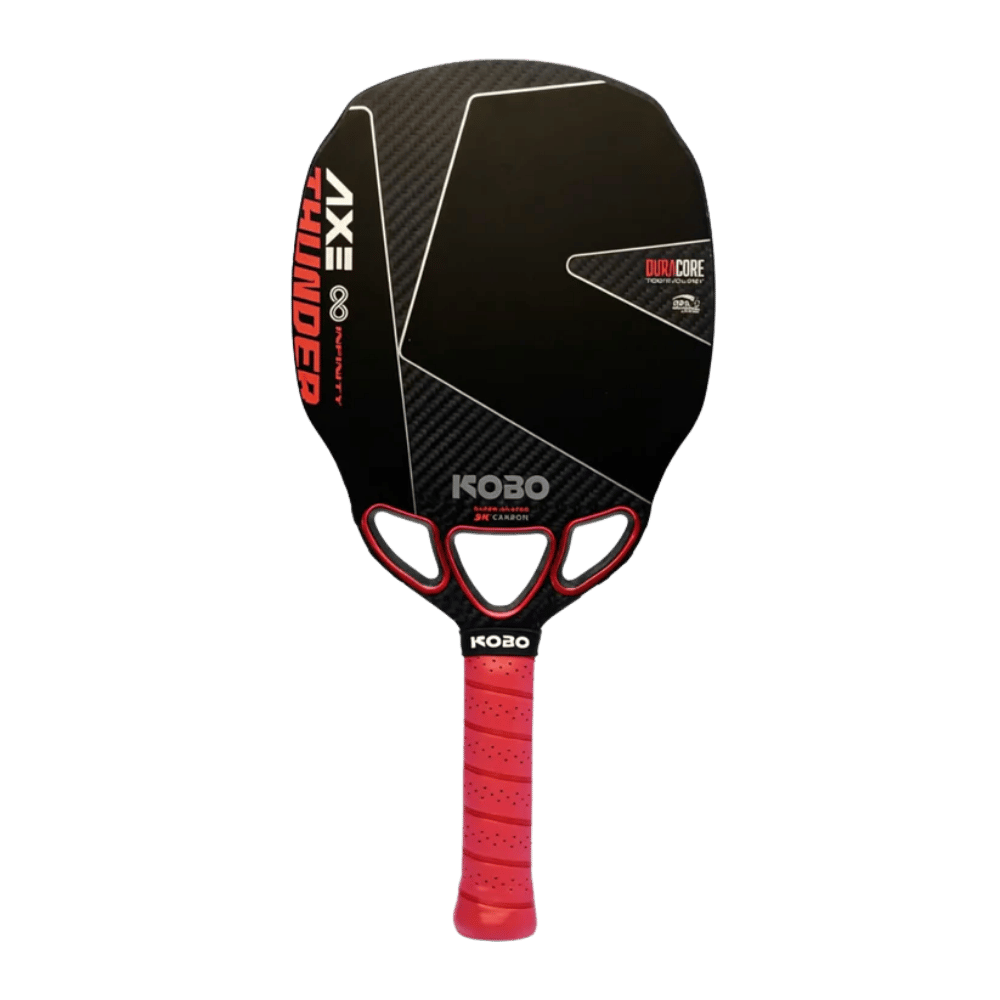
If you're choosing between 13mm, 14mm, and 16mm versions of the same paddle, you're choosing between three completely different paddles. The core thickness affects pop, control, swing weight, and feel more than any other single spec — and the differences are big enough that the "right" thickness for your game is one of the most consequential paddle decisions you'll make.
The Three-Way Comparison
| Spec | 13mm | 14mm | 16mm |
|---|---|---|---|
| Pop | Highest | Medium-high | Lowest |
| Control | Lowest | Medium | Highest |
| Sweet spot | Smallest | Medium | Largest |
| Swing weight | Tends lower | Medium | Tends higher |
| Feel | Snappy, loud | Balanced | Soft, muted |
| Reset ability | Hardest | Good | Excellent |
| Best for | Power, singles, hand battles | All-court | Doubles, dinks, drops |
13mm: Maximum Pop
13mm cores deflect more on contact, which gives the ball more rebound velocity. Players coming from 16mm paddles often feel like the ball jumps off a 13mm paddle. Great for: hand battles, putaways, drives. Hard part: resets. A hard incoming drive that you'd block calmly with a 16mm can pop up to net height on a 13mm if you don't actively absorb with your hands.
14mm: The Sweet Spot
14mm has become the most-recommended thickness for intermediate and all-court players. The reason: it splits the trade-off well enough that you don't feel underpowered on drives or out of control on resets. Most all-court doubles players land at 14mm and stay there.
16mm: Maximum Control
16mm cores absorb more energy at contact, which means harder incoming balls die against the face. That's exactly what you want on a third-shot drop or a hard kitchen-line block. The trade-off: putaways take more effort because the paddle won't generate as much rebound velocity from a slow swing.
How to Decide
Three questions:
- How often do you put balls away from the kitchen versus reset hard incoming drives? Putaways = 13mm. Resets = 16mm. Both = 14mm.
- What's your dominant game format? Singles = 13mm. Doubles soft-hands = 16mm. Doubles all-court = 14mm.
- Are you stronger or weaker than you used to be? Stronger = consider 16mm (you can generate your own pace, you want the control). Weaker or older = consider 13mm (you need the help generating pace).
Bottom Line
14mm is the safest choice if you don't know. 13mm if you're a power-and-pop player who wins points off drives. 16mm if you're a touch-and-control player who wins points by outlasting opponents in dink rallies. Most intermediate doubles players belong at 14mm.