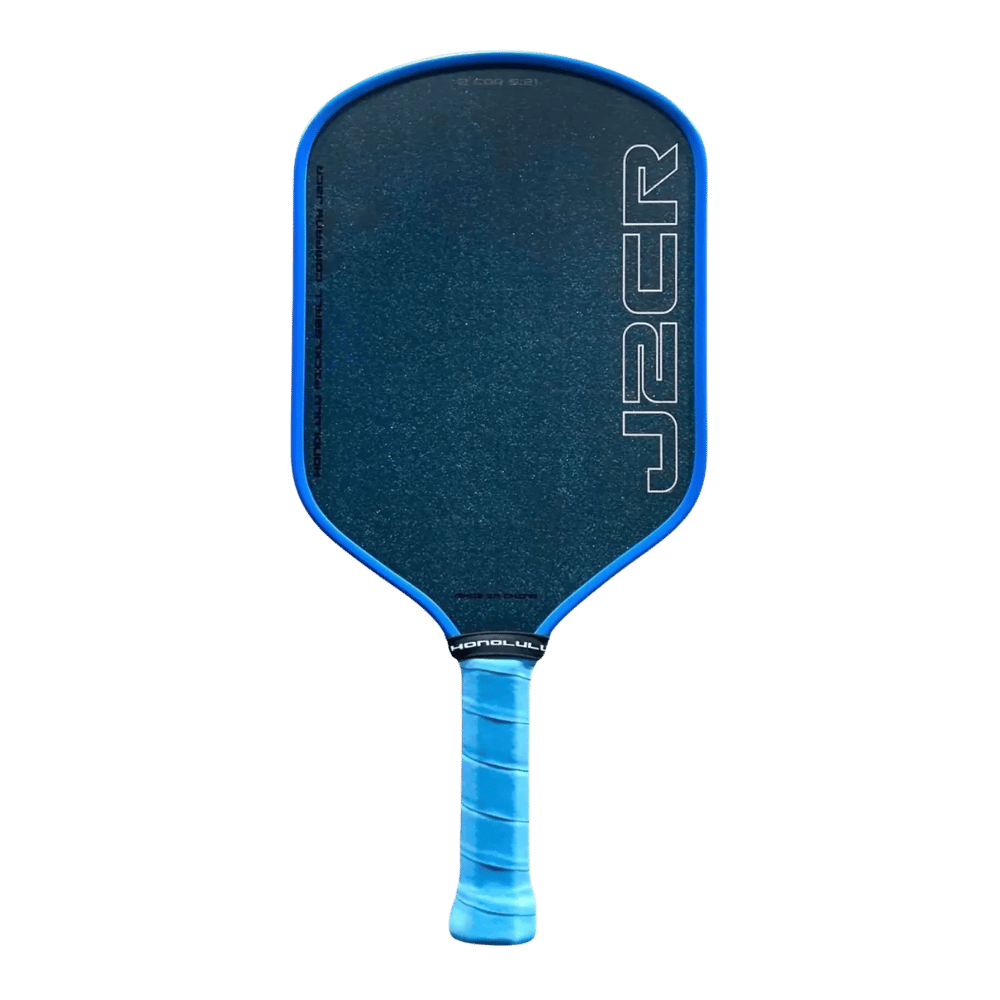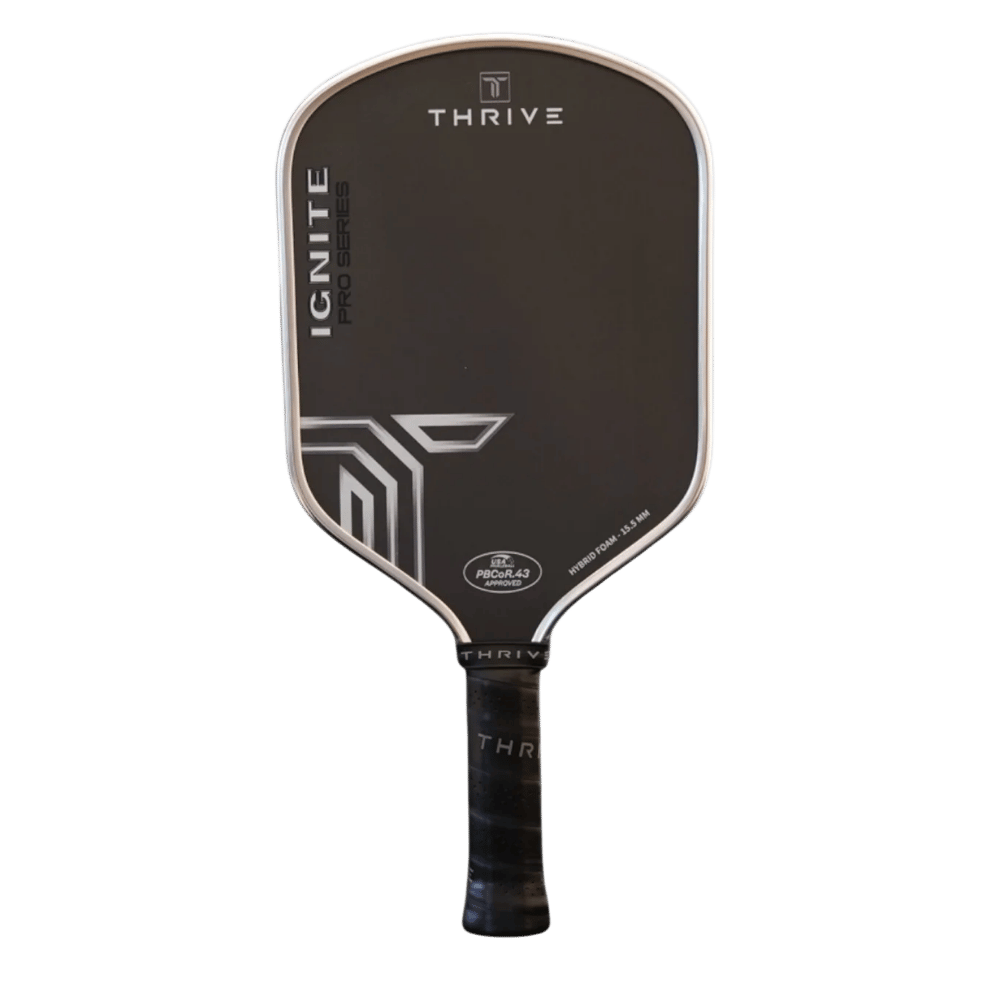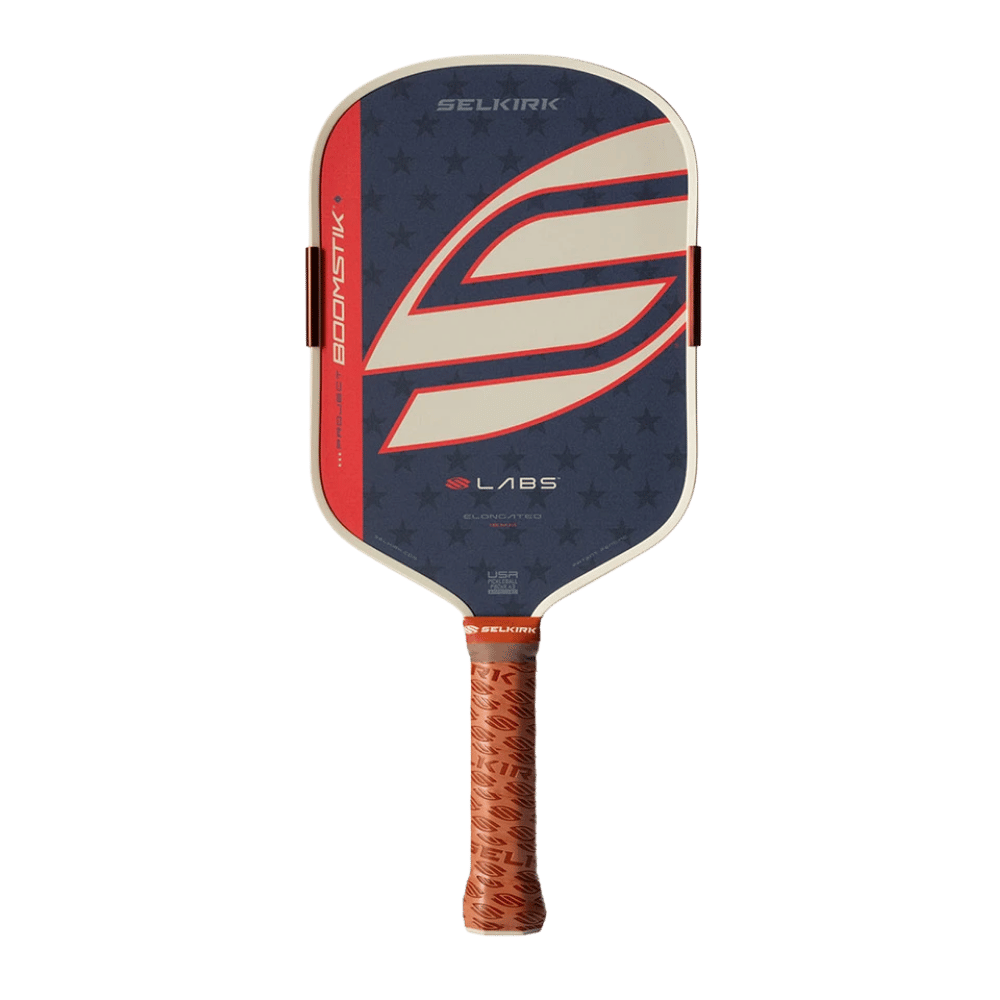
Pickleball paddles are a tuning problem, not a quality problem. There are dozens of great paddles in every price tier — the question isn't "which is best," it's "which is right for you." This guide walks through the decisions in the order that matters most, so by the time you're comparing specific models you've already narrowed the field by 80%.
Step 1 — Pick a Shape
Shape is the biggest single decision because it affects feel more than any other spec. Three options: widebody (16" × 8.25", biggest sweet spot, fastest hands), elongated (16.5" × 7.5", most reach and power, smallest sweet spot), and hybrid (16.3" × 7.7", the compromise — most-recommended for intermediate players).
Step 2 — Pick a Thickness
| You Want | Pick |
|---|---|
| More pop, faster putaways, singles play | 13mm |
| All-court balance, don't know yet | 14mm |
| More control, better dinks and resets | 16mm |
Step 3 — Check Swing Weight
Swing weight (SW) is the number that predicts how the paddle will feel in your hand more than any other spec. 108–115 is the all-court sweet spot. Above 116 = head-heavy and powerful (great for drives, harder on the shoulder). Below 108 = light and whippy (great for hand battles, less plough-through). Brand specs sometimes lie; check a third-party measurement before buying.
Step 4 — Pick a Static Weight
Most paddles weigh 7.6–8.4 oz. Lighter (7.6–7.9 oz) is easier on the arm and faster in hand battles; heavier (8.0–8.4 oz) gives more stability and power. If you have any history of tennis or pickleball elbow, start at the lighter end and add lead tape later if needed.
Step 5 — Pick a Grip Size
Grip circumference matters more than people realize. Standard sizes are 4 1/8", 4 1/4", and 4 3/8". A grip that's too small causes you to over-grip and tense your forearm; a grip that's too big slows your wrist snap. The simple test: hold the paddle and see if you can slide your non-dominant index finger flat between your fingertips and your palm. If yes, the grip is right. If no, go down a size.
Step 6 — Set a Budget
Realistic budget tiers right now: $80–130 for entry/intermediate (Speedup Tide, Bread & Butter, Enhance Turbo). $130–200 for solid mid-range (Six Zero Coral, Aireo Cyclone, RPM Q2). $200–280 for premium (Selkirk Boomstik, Honolulu Crystal Blue, Friday Aura Pro). Above $280 = flagship territory (Joola, Selkirk top tier). The performance gap between $150 and $250 is real; between $250 and $350, much smaller.
Bottom Line
Shape → thickness → swing weight → static weight → grip size → budget, in that order. Skip the brand-first approach. Pick the specs that fit your game, then look at which brands offer paddles matching those specs, then read reviews.