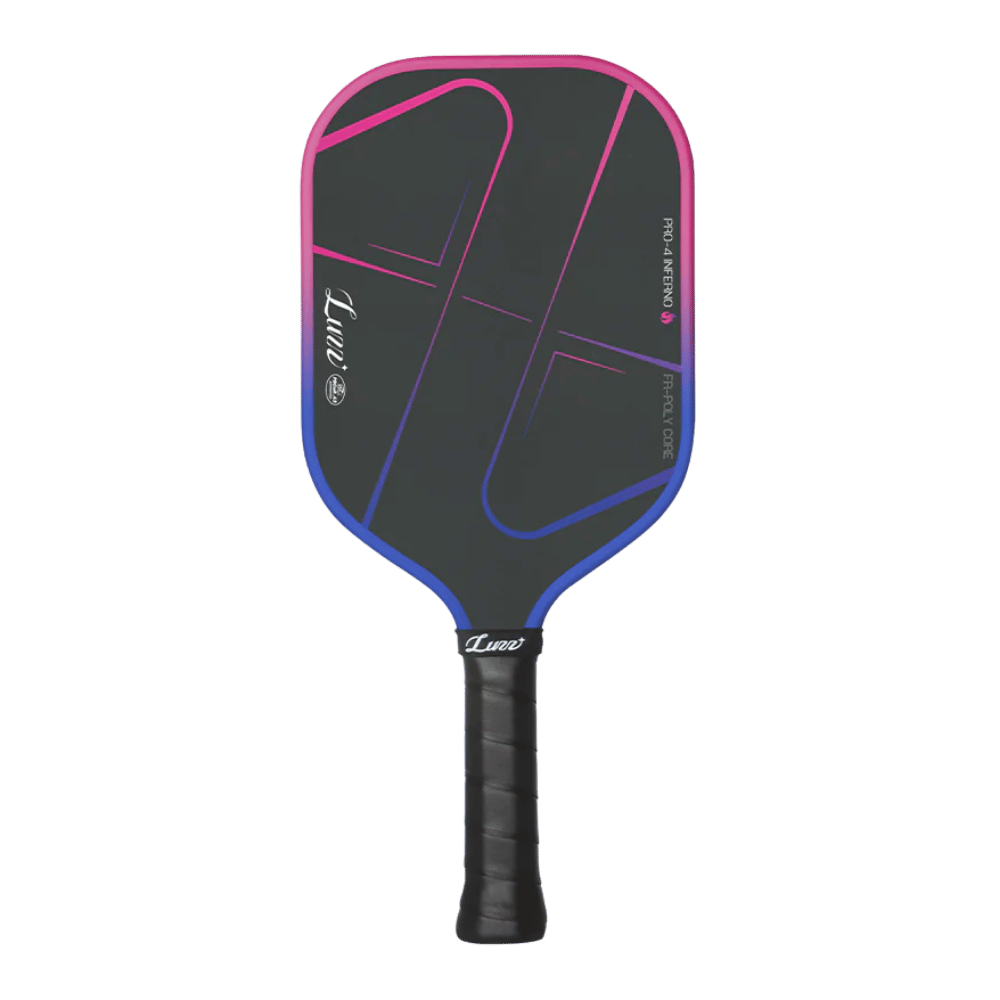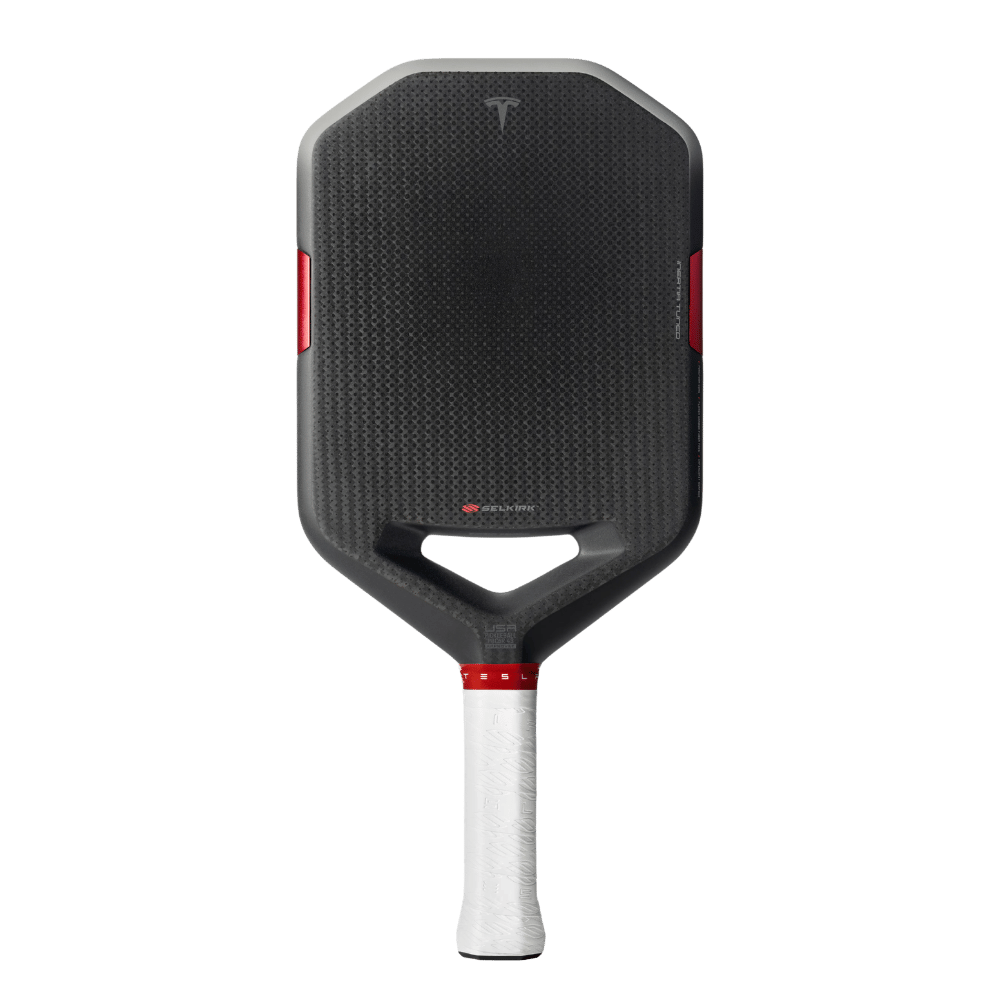
Swing weight is a measurement of how heavy a paddle feels when you swing it — not how much it weighs on a scale. Two paddles can both weigh 8.0 oz and have completely different swing weights, because swing weight depends on where the mass is distributed, not just how much there is. If you've ever wondered why one 8-oz paddle feels "head-heavy and powerful" while another 8-oz paddle feels "whippy and quick," swing weight is the answer.
How Swing Weight Is Measured
Technically, swing weight is the moment of inertia (MOI) of the paddle around an axis 10 cm from the butt of the handle. The standard test machine is the Briffidi SW1, which most paddle reviewers in the space use, and which produces the numbers you see in our paddle database. The units are kg·cm² but everyone shortens them to just "swing weight" or "SW."
What the Numbers Mean
| Swing Weight | Feel | Best For |
|---|---|---|
| 95 – 105 | Light, very maneuverable | Hand battles, junior players, players returning from injury |
| 106 – 115 | Balanced — most popular range | All-court doubles play, intermediate players |
| 116 – 122 | Head-heavy, powerful | Power-focused players, singles, serve-heavy games |
| 123 + | Very head-heavy | Specialist power paddles; can cause shoulder strain in long sessions |
Why Swing Weight Predicts Power
A higher swing weight means the paddle's mass is farther from your hand, which gives the ball more momentum to transfer into when you hit it. Same swing speed × more mass at the contact point = more ball speed. That's why high-SW paddles like the Luzz Inferno (118.5) or the Selkirk Tesla Plaid (124+) feel so explosive on drives.
Why Swing Weight Predicts Stability
The same physics that gives a high-SW paddle more power also gives it more stability on off-center hits — a heavier head resists twisting when the ball strikes outside the sweet spot. The downside is that you can't move it as fast. In a kitchen-line hand battle, the player with the lower-SW paddle usually wins reaction-speed exchanges.
How to Adjust Swing Weight
If your paddle's swing weight isn't quite right, lead tape is the standard fix. Adding lead at the 3- and 9-o'clock positions raises swing weight and twist weight roughly equally. Adding lead at 12 o'clock raises swing weight much more than twist weight. A 3 g strip at 3-and-9 typically adds 3–5 SW points and 0.3–0.5 TW points.
Bottom Line
Before you buy a paddle, look up its swing weight. Most all-court players are happiest in the 108–115 range. If you've struggled with "the paddle is too heavy" on your last paddle, look for something under 110. If you've struggled with "the paddle feels weak," look for something over 115.