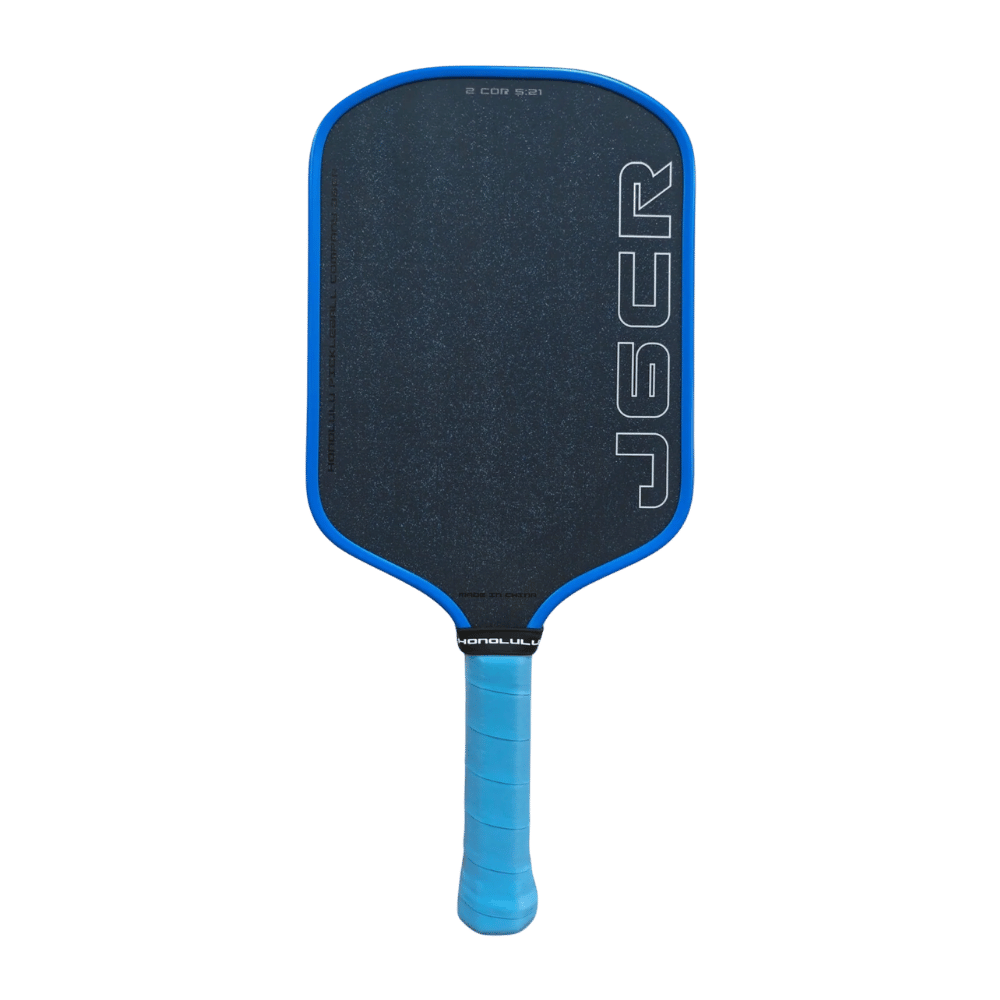
Lead tape is the secret weapon of intermediate-to-advanced pickleball players. A $5 roll plus 10 minutes of experimentation can change a paddle's swing weight by 5–10 points, its twist weight by 0.5–1 point, and its overall balance by a noticeable amount. The trick is knowing where to put it — every position on the paddle has a different effect.
What Lead Tape Does
Lead tape adds mass at a specific location on the paddle. The location matters more than the amount because moment of inertia (which is what swing weight and twist weight measure) depends on how far the mass is from the rotation axis. The same 3 g of tape can add 5 SW points at the tip or only 1 SW point near the handle.
Common Placements and What They Do
| Position | Effect | When to Use |
|---|---|---|
| 3-and-9 o'clock (sides at the wide point) | +SW +TW (balanced upgrade) | Most-recommended placement — adds power AND stability |
| 12 o'clock (tip of the paddle) | +SW (lots) without much +TW | Add more drive power; can feel top-heavy |
| 2-and-10 o'clock (corners near the tip) | +SW +TW (tip-biased) | More aggressive drive paddle; harsher mishits |
| 6 o'clock (throat of the paddle) | Counter-weight; lowers swing weight | Make a head-heavy paddle feel lighter without removing weight |
| Under the grip (in the butt cap) | Lowers swing weight, raises static weight | Stabilize a whippy paddle without slowing it down |
How Much Tape to Use
Start small. A typical 0.5"-wide lead tape strip weighs about 0.5 g per inch. Most players land between 3 g and 9 g total. A 3 g add (one 6-inch strip split between 3-and-9) adds roughly 3–5 SW points and 0.3–0.5 TW points — enough to feel different but not so much it transforms the paddle. Add more in 1.5–3 g increments and play with each setup for at least an hour before changing it again.
The Process
- Buy 0.5" lead tape — Tourna Lead Tape, Babolat Lead Tape, and Gamma Lead Tape are all fine.
- Decide your target: more power (12 o'clock), more stability (3-and-9), or more whip (handle).
- Cut a 3-inch strip per side. Apply at the exact 3-and-9 position on each side of the paddle face.
- Play for at least one full session at that setup. Don't make multiple changes per day — you can't tell what worked.
- If you need more, add another 1.5" per side. If it feels worse, peel it off and try a different position.
The Safety Note
Lead is toxic if ingested or inhaled as dust. Don't cut lead tape over food prep surfaces, wash your hands after handling, and keep it away from children. Once it's stuck on the paddle and sealed under the edge guard or paint layer, exposure risk is essentially zero — but during application, treat it like the metal it is.
Bottom Line
Lead tape is the best $5 you can spend on your paddle game. Start at 3-and-9 with 3 g total, play with it for a week, and adjust from there. Most players who experiment for a session or two end up dialing in a setup they prefer to the stock paddle.