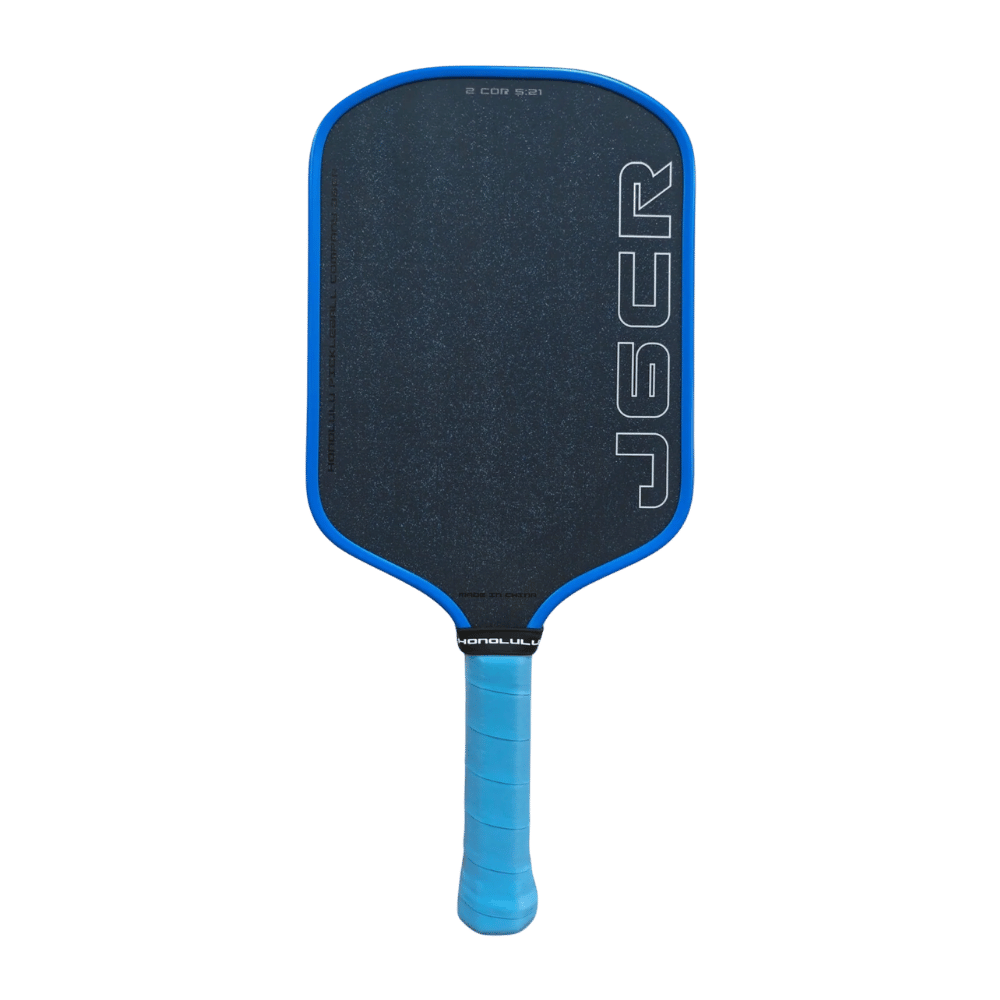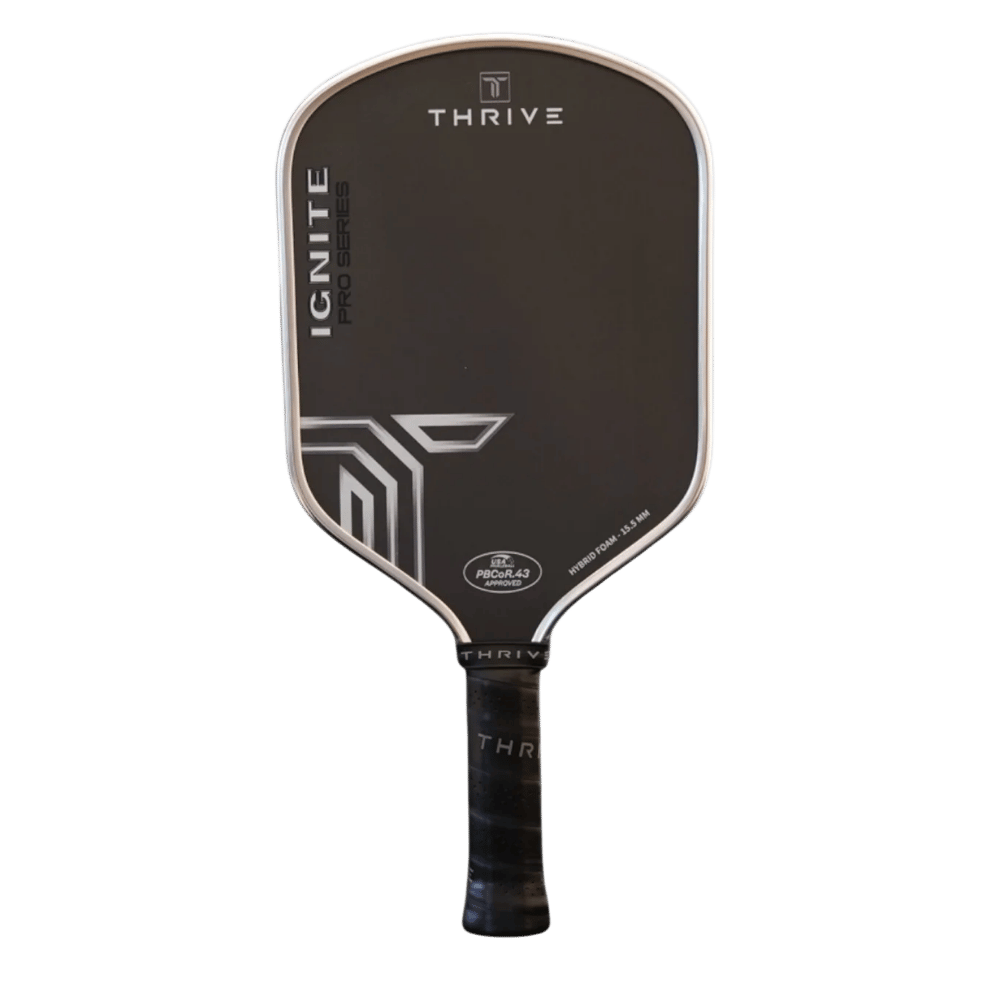
Twist weight is the measurement of how resistant a paddle is to twisting in your hand when the ball strikes off-center. Where swing weight tells you about power, twist weight tells you about forgiveness. A paddle with a high twist weight will feel stable and predictable on mishits; a paddle with low twist weight will torque in your hand the moment you contact the ball anywhere other than dead center.
How Twist Weight Is Measured
Twist weight is the polar moment of inertia of the paddle around its long axis (the axis running from butt to tip through the center of the face). It's measured on the same Briffidi SW1 machine that measures swing weight, but on a different axis. Units are kg·cm². Most paddles fall between 4.8 and 7.5 TW.
What the Numbers Mean
| Twist Weight | Feel | Notes |
|---|---|---|
| 4.8 – 5.4 | Narrow effective sweet spot | Demands clean contact — typical of older or thinner elongated paddles |
| 5.5 – 6.0 | Average | Solid forgiveness for most players |
| 6.1 – 6.7 | Stable | Modern thermoformed paddles often live here |
| 6.8 + | Very stable | Wide-body or heavily edge-weighted paddles — extremely forgiving |
Why Twist Weight Matters More Than Sweet Spot Size
When people say "big sweet spot," what they usually mean is high twist weight. The sweet spot isn't really a fixed zone on the paddle face — it's the area where the ball comes off the face with predictable speed and direction. The bigger your twist weight, the wider that zone effectively becomes, because off-center hits don't torque the face as much.
How Twist Weight Pairs With Shape
Widebody paddles typically have higher twist weight than elongated paddles, because mass that's farther from the center axis (i.e., farther out on the wide face) contributes more to TW. That's the main reason elongated paddles "feel less forgiving" — it's not really the longer shape per se, it's the lower twist weight that comes with making the face narrower.
Adjusting Twist Weight With Lead Tape
Lead tape at the 3- and 9-o'clock positions adds twist weight efficiently. A 3 g strip at 3-and-9 typically raises TW by 0.3–0.5 points. Adding lead at 12 o'clock barely adds twist weight — it mostly raises swing weight. So if your paddle feels twitchy on mishits, 3-and-9 is the lead-tape position to start with.
Bottom Line
When you're shopping, check twist weight alongside swing weight. A paddle with 115 SW and 6.5 TW is a power paddle with a forgiving sweet spot — the unicorn combination. A paddle with 115 SW and 5.2 TW will feel powerful but unforgiving. Most players are happiest at 6.0+.