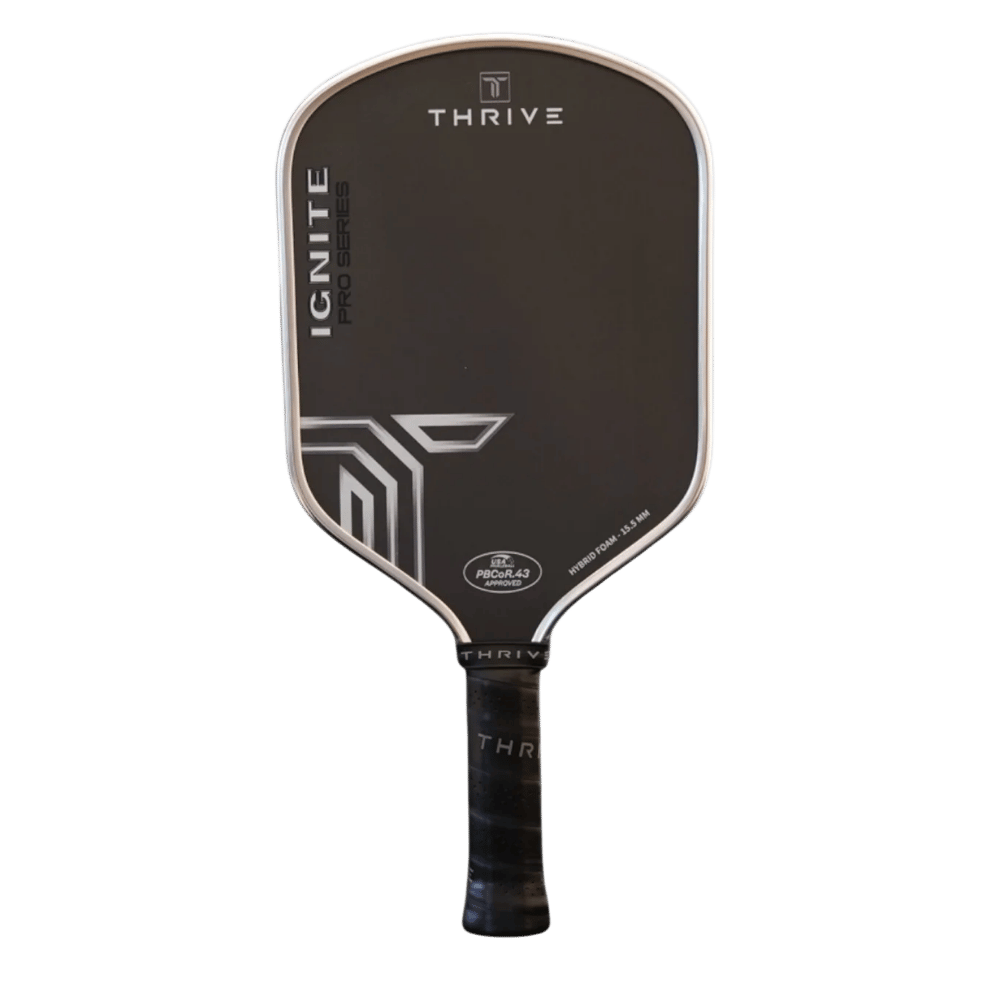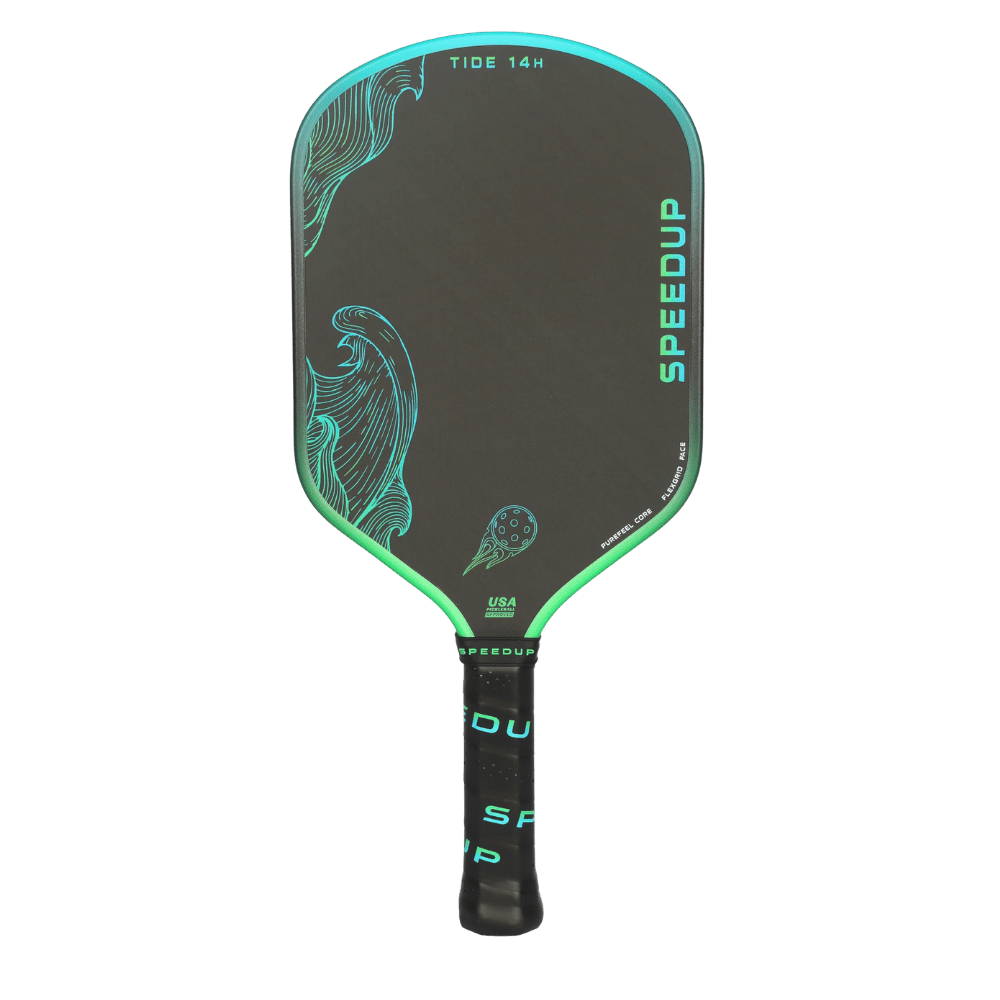
When people say a paddle is "light" or "heavy," they're usually talking about static weight — what the paddle reads on a scale, in ounces. That's the easy number to measure but it's a poor predictor of how the paddle actually feels to swing. Swing weight (how the mass is distributed) matters far more. This guide explains both, then tells you how to balance them.
The Weight Categories
| Weight (oz) | Category | Best For |
|---|---|---|
| 7.2 – 7.6 | Light | Hand-speed players, juniors, players returning from elbow injury |
| 7.7 – 8.0 | Medium-light | All-court doubles, most intermediate players |
| 8.1 – 8.4 | Medium-heavy | Power players, drivers, singles players |
| 8.5 + | Heavy | Pure power specialists; can cause shoulder strain over long sessions |
Why Static Weight Misleads
Two paddles can both weigh exactly 8.0 oz and feel completely different. If one has all its mass in the head and the other has it concentrated in the handle, the head-heavy one will plow through the ball with more authority — and feel slower to maneuver — even though both register the same on the scale. That's swing weight, and it's the better number to chase.
How to Match Weight to Your Game
- If you struggle with hand-battle reaction time: go lighter (≤ 7.8 oz, SW ≤ 110)
- If your drives feel weak: go heavier or shift mass to the head (8.0+ oz, SW 115+)
- If you have elbow or shoulder pain: drop weight and swing weight both (≤ 7.8 oz, SW ≤ 112)
- If you play singles: lean head-heavy and slightly elongated (SW 115–122)
- If you're a soft-hands doubles specialist: balanced or handle-heavy, SW 105–113
You Can Always Add Weight Later
The single best piece of paddle-buying advice: when in doubt, go light. Lead tape lets you add weight to any paddle in 0.5–3 g increments wherever you want it. You can't remove weight from a paddle that's too heavy. So if you're between a 7.8 oz and an 8.1 oz version of the same paddle, get the 7.8 — and tune up if you want more.
The Elbow Pain Caveat
Heavy, head-heavy paddles cause more wrist and elbow stress than light, balanced ones. If you've ever had tennis elbow, golfer's elbow, or any chronic forearm pain, every extra ounce on the head matters. Many players who develop elbow pain in their first year of pickleball fix it just by switching to a lighter paddle.
Bottom Line
Pick weight by feel, not by spec sheet. If a paddle reads 8.0 oz but feels light because the mass is near the handle, that's the right number for you — chase the feel. And if you're not sure, always err lighter. Adding weight is easy; removing it isn't.