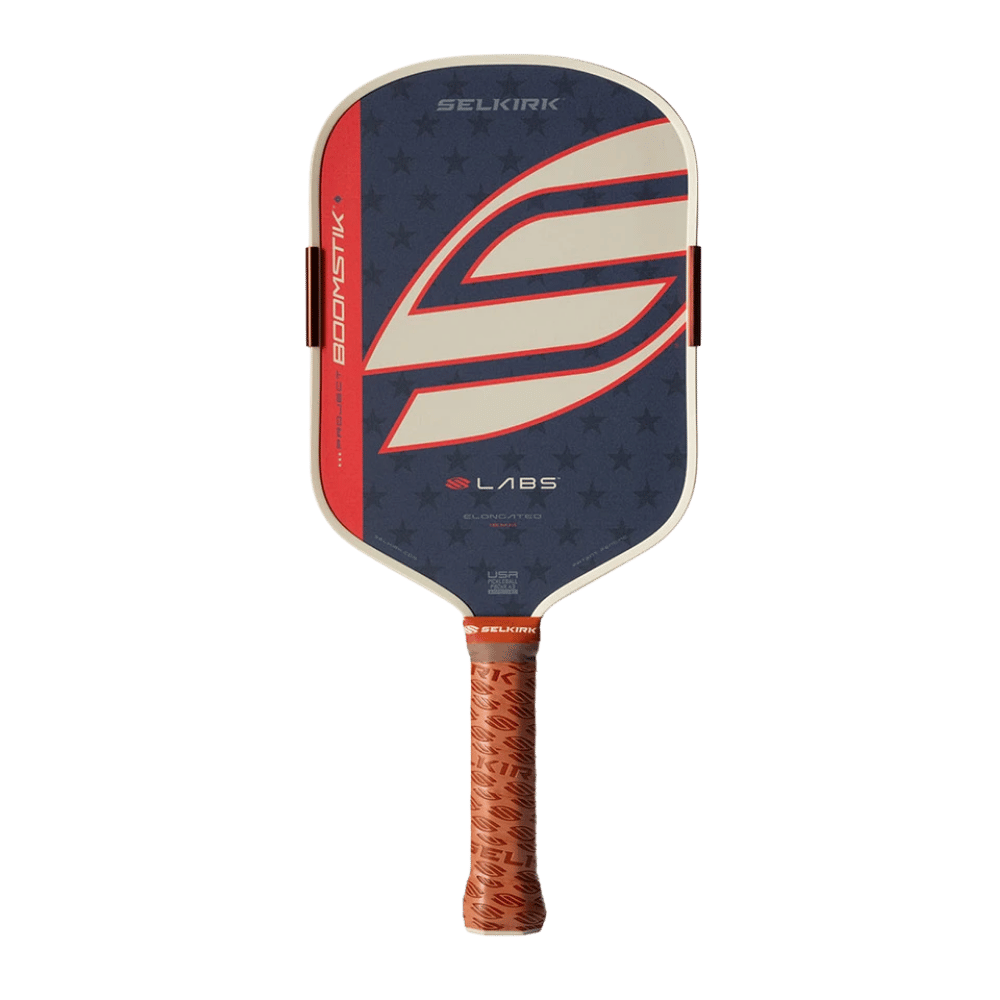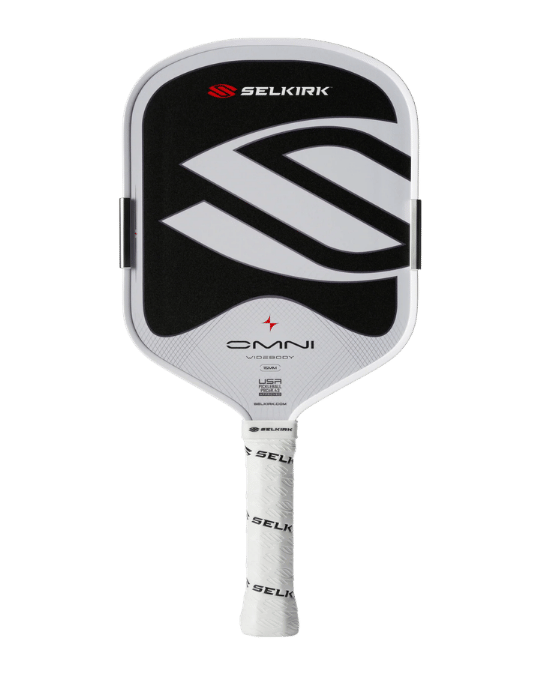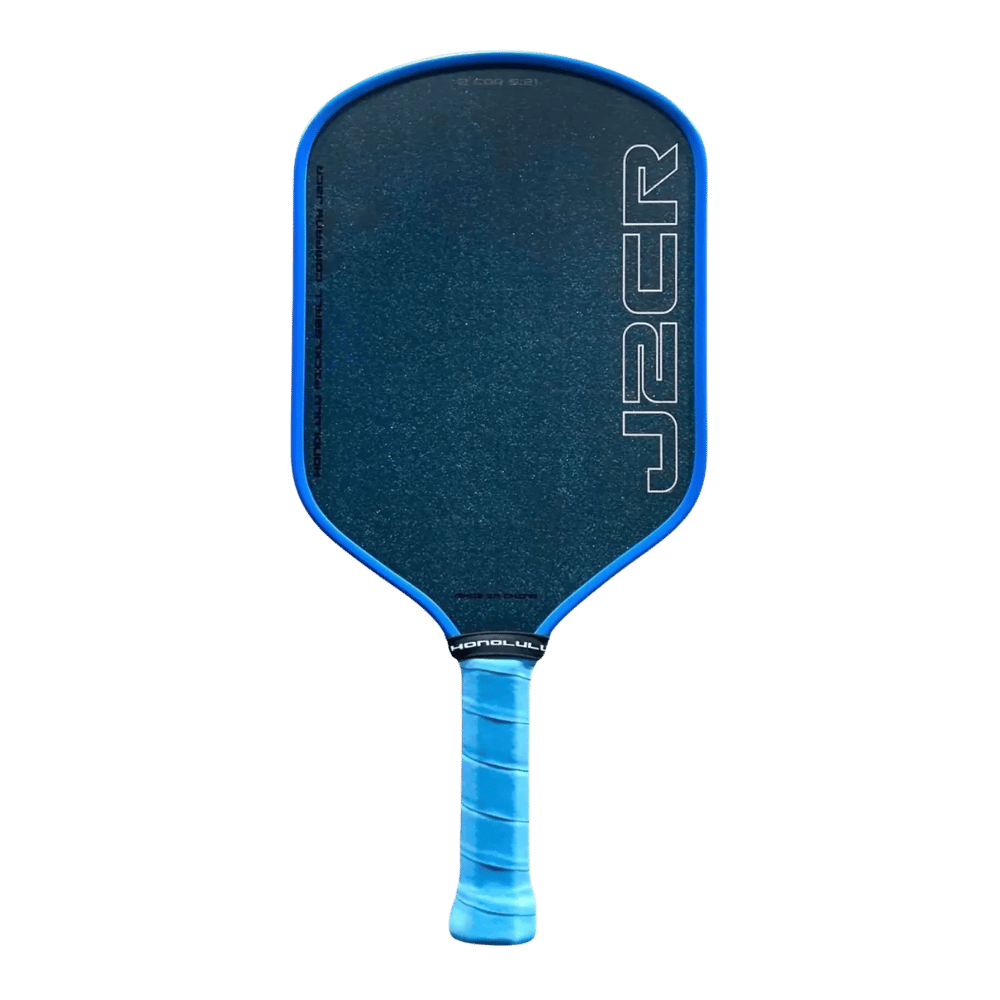
Elongated and widebody are the two original paddle shape categories — and despite the rise of hybrids, picking between them is still the foundational decision in paddle shopping. The right answer depends entirely on your playing style. Power and reach players gravitate elongated; touch and hand-speed players gravitate widebody. The differences are bigger than they look on a spec sheet.
Side-by-Side
| Spec | Elongated | Widebody |
|---|---|---|
| Total length | 16.5" | 16.0" |
| Face width | ~7.5" | ~8.25" |
| Handle length | ~5.5" | ~4.5–5.0" |
| Sweet spot size | Smaller, tip-biased | Larger, centered |
| Swing weight typical | 115–122 | 105–112 |
| Best for | Power, reach, serves | Hand speed, dinks, forgiveness |
Power and Reach: Elongated Wins
Elongated paddles win on raw power for two reasons. First, the longer lever arm means the contact point is farther from your hand, so the same swing speed produces more ball speed. Second, elongated paddles tend to have higher swing weights — more mass farther from the pivot — which adds momentum to drives. On serves, the extra reach also lets you hit higher contact points, which translates to more downward angle and harder serves.
Hand Speed and Forgiveness: Widebody Wins
Widebody paddles have larger sweet spots because the wider face puts more mass farther from the rotation axis — that's higher twist weight, which means less paddle face rotation on off-center hits. They also have lower swing weights because more of the mass sits closer to your hand, so the paddle moves through the air faster. In kitchen-line hand battles, that hand speed often decides who wins the exchange.
Hybrid: The Middle Ground
If reading the comparison above you find yourself thinking "I want some of both," you want a hybrid (16.3" × 7.7"). Hybrids preserve most of the elongated reach advantage while recovering meaningful sweet spot. They're the fastest-growing shape for exactly that reason.
Style-Based Recommendation
- Singles player → Elongated
- Aggressive doubles banger → Elongated or Hybrid
- Soft-hands doubles dinker → Widebody
- Kitchen-line specialist → Widebody
- All-court doubles player → Hybrid
- Beginner → Widebody or Hybrid (not elongated)
- Tennis convert → Elongated (the head-heavy feel maps to tennis)
Bottom Line
Pick by playing style, not by what's trendy. If your game is built around power and reach, elongated. If it's built around touch and quickness, widebody. If you can't decide or you genuinely play all-court, get a hybrid — that's exactly what they're for.