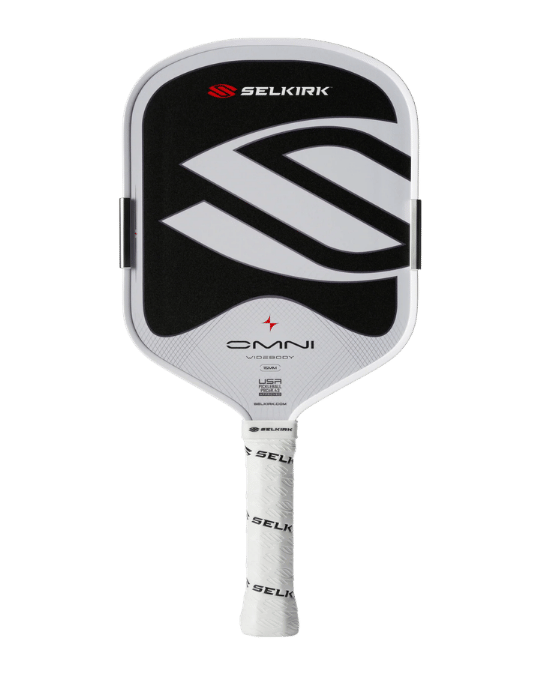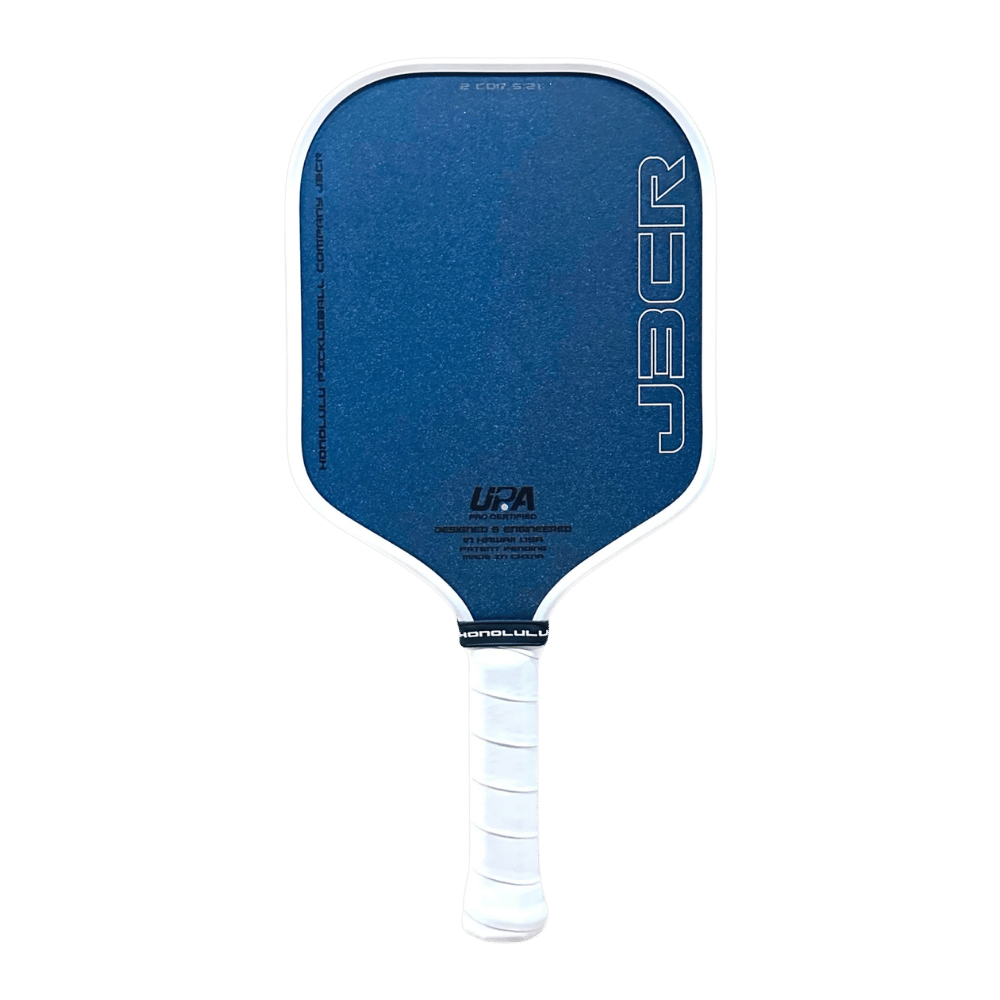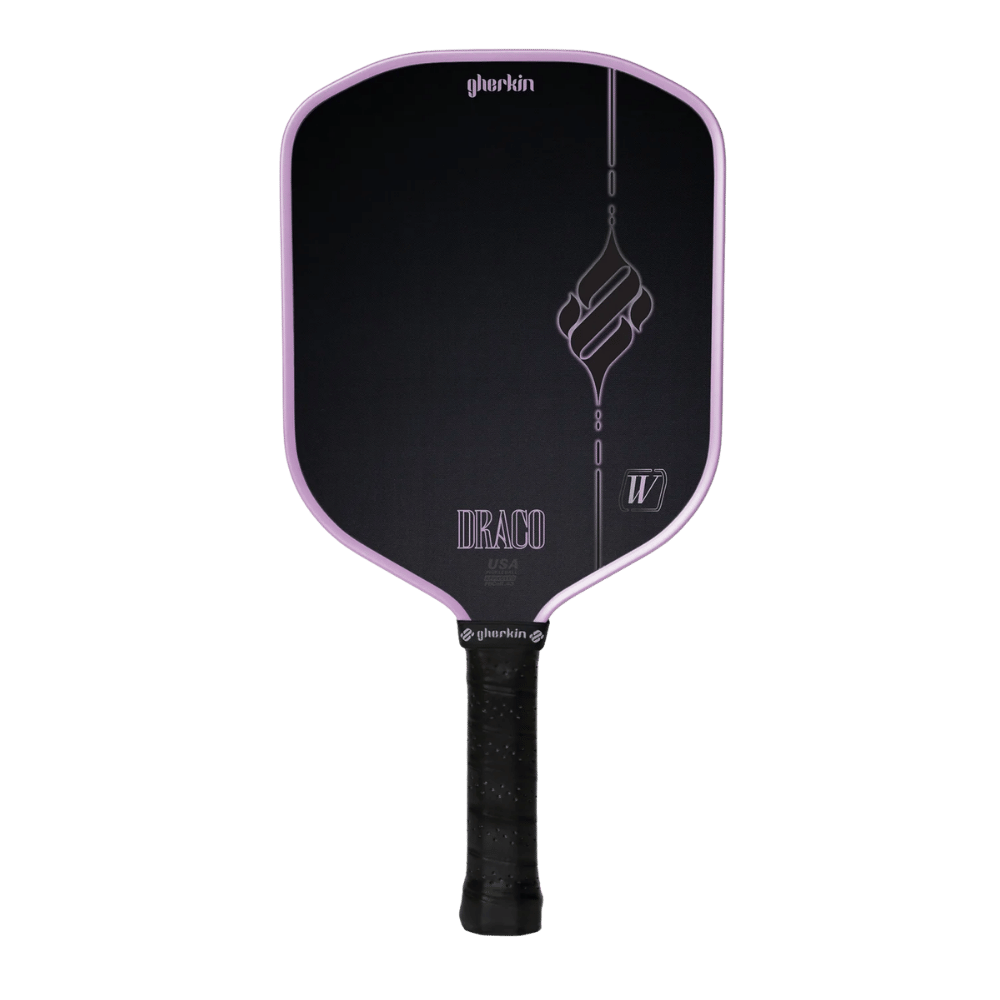
A widebody pickleball paddle is one with a wider, shorter face — typically 16 inches in total length and around 8.25 inches wide. That's the original "classic" paddle shape, the one most beginners start with, and despite all the noise about elongated and hybrid shapes, it's still the right answer for a lot of players.
What the Wider Face Buys You
- A bigger sweet spot — off-center hits don't punish you as harshly
- Faster hand speed at the kitchen — the lower swing weight gets the paddle moving quicker
- Better forgiveness on miss-hits — important when you're learning or when you're tired
- More predictable behavior on dinks and drops
- Often a shorter handle — better for two-handed backhand players
What You Give Up
The trade is reach and leverage. A widebody is roughly half an inch shorter than an elongated, which doesn't sound like much until you're stretching for a passing shot at the kitchen and your paddle comes up just short. You also lose some serve power and some "plough-through" on drives, because the contact point is closer to your hand.
Who Should Buy a Widebody
- Beginners — the bigger sweet spot accelerates learning
- Doubles players who live in fast hand battles at the kitchen
- Players with smaller hands or shorter reach — the lower swing weight is easier to control
- Players returning to pickleball after a break or an injury — the forgiveness helps consistency
- Players who already have great touch and want a paddle that won't fight them on resets
Are Widebodies Outdated?
No. The conversation about "elongated being the future" obscures the fact that widebodies still win matches and still sell well. Selkirk, Joola, Paddletek, and many other brands still launch new widebody models every year. The shape category isn't dying — it's just no longer the only shape on the menu.
Bottom Line
If you're a beginner, play doubles, or rely on fast hands at the kitchen, a widebody is still the smart pick. If your game is built around reach, serves, and drives, look at hybrid or elongated instead.