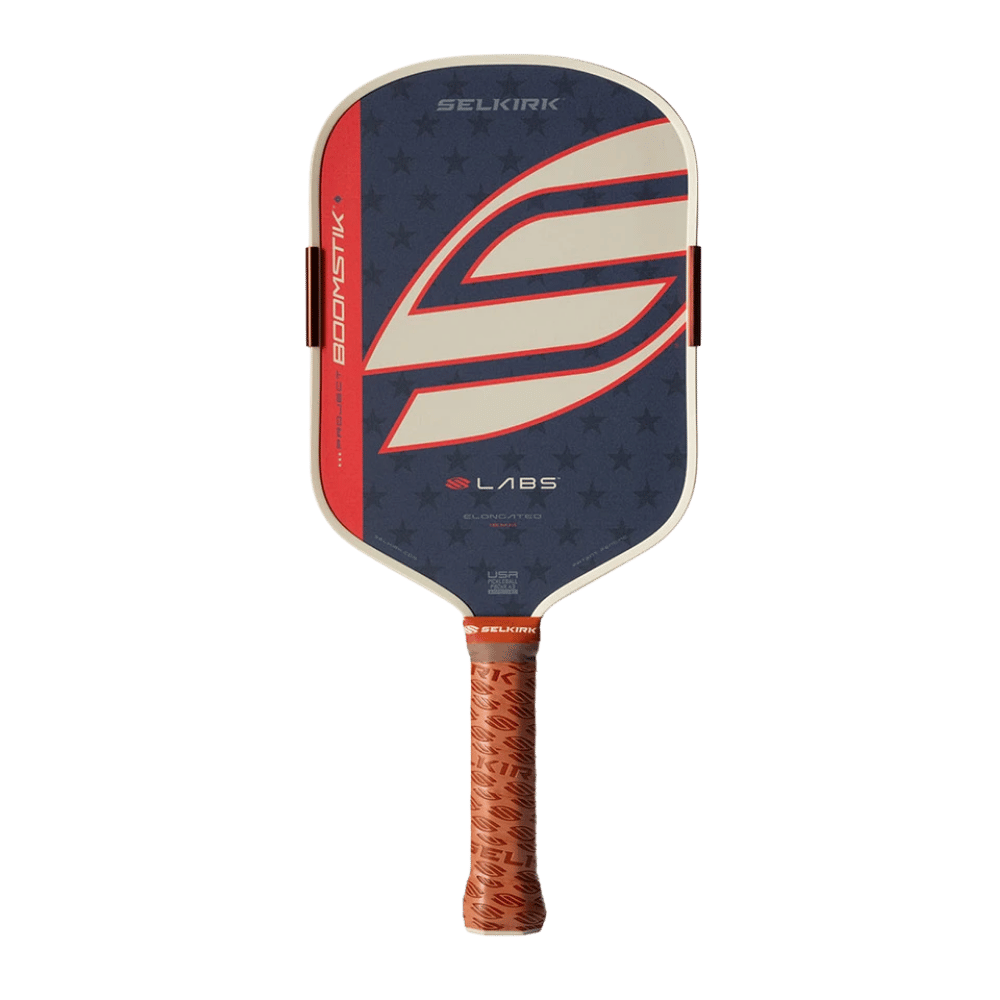
An elongated pickleball paddle is one with a longer-than-standard face — typically 16.5 inches in total length (the max USAPA permits) with a face that's around 8 inches wide. Compared to a standard widebody at 16 inches total and 8.25 inches wide, elongated paddles trade width for length. That shape change has bigger consequences than it sounds.
Why Players Choose Elongated
- More reach on stretch shots and around the kitchen line
- More leverage on serves and drives (the contact point is further from your hand)
- Higher swing weight, which translates to more plough-through power
- Better whip-through on serves and overhead smashes
- Visually intimidating — and that matters more than most players admit
The Trade-Offs
Elongated paddles aren't a free upgrade. The sweet spot is smaller and shifted toward the tip, which means off-center hits in the throat of the paddle feel dead. The higher swing weight that gives them power also slows them down — which hurts in hand battles at the kitchen, where reaction time matters more than raw force. And the longer lever arm makes them less stable on resets: a hard incoming ball can twist the face more than a wider paddle would.
Who Should Buy an Elongated Paddle
- Singles players (the extra reach and serve power is a real edge)
- Power-focused doubles players who win points off drives and putaways
- Players with a tennis background — the longer-handled, head-heavy feel maps to a tennis racket
- Players who want to maximize spin (the longer face = longer racket-path through contact)
Who Should Skip an Elongated Paddle
- Pure dinkers and reset specialists — the smaller sweet spot punishes touch shots
- Beginners — the trade-offs reward technique you may not have yet
- Players with shoulder or elbow issues — high swing weight = more strain
- Players who live at the kitchen and win points in hand battles
Bottom Line
Elongated paddles are the right answer for power-and-reach players, especially in singles or aggressive doubles. If your game is built around touch, hand speed, or you're still learning, a hybrid or widebody will serve you better.