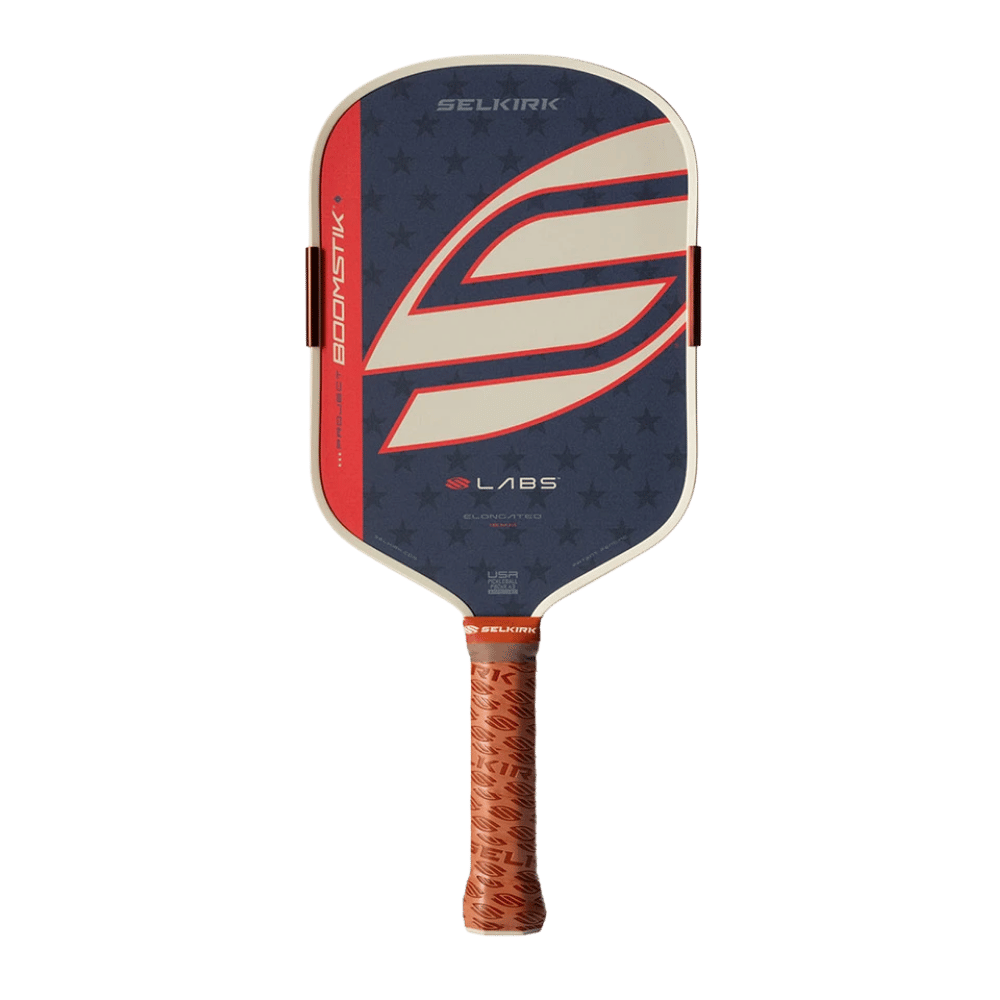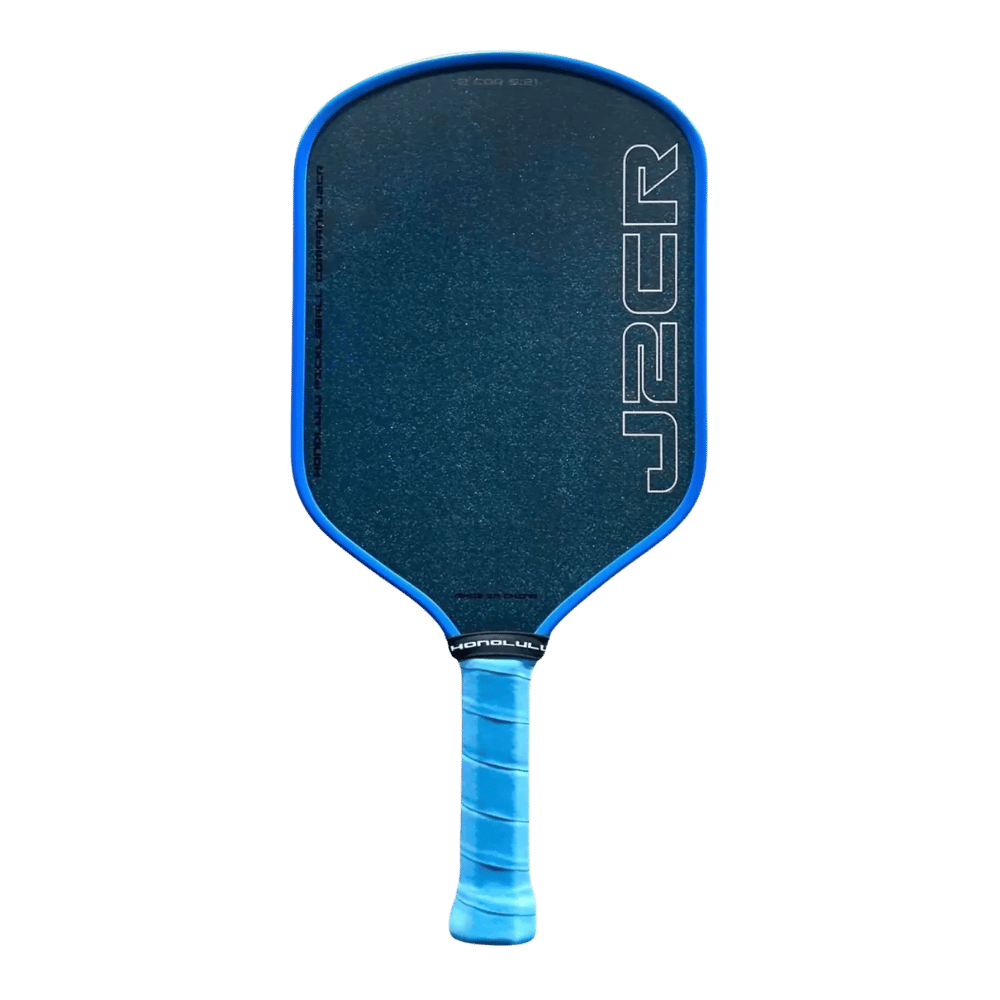
A raw carbon fiber pickleball paddle is one where the carbon weave is exposed rather than covered with a paint or coating layer. "Raw" doesn't mean the face is untreated — there's still a thin clear resin coating to protect the fibers — but the weave pattern stays visible and the natural texture of the carbon weave is preserved instead of smoothed over.
Why Raw Beats Painted
Painted carbon paddles look slicker but they perform worse. The paint layer adds 0.05–0.10mm of smooth surface on top of the rough carbon weave underneath, which kills spin generation. Players who switched from painted to raw carbon in 2022–2023 reported 20–30% more measured spin RPM with the same swing — that's the gap painting was costing.
T700 vs T300 — What the Numbers Mean
Carbon fiber comes in tensile-strength grades. T300, T400, T700, T800, and T1000 are increasing grades of stiffness and strength per gram of material. Most pickleball paddles use T300 or T700; a few flagships use T800. Higher grades are stiffer (more pop on drives, more vibration through the handle) and more expensive.
| Grade | Stiffness | Common Use |
|---|---|---|
| T300 | Moderate | Mid-range paddles ($150–200) — softer, dampened feel |
| T700 | High | Most premium paddles ($200–280) — modern spin standard |
| T800 | Very high | Top-shelf paddles ($280+) — maximum stiffness, snappiest feel |
Raw Carbon and Spin
The natural texture of an exposed carbon weave grabs the ball more than a painted face does. That's the entire reason raw carbon dominates the spin-paddle market — it's not a marketing claim, it's a measurable physical difference. Combined with thermoforming (which gives the face more pop on contact), raw carbon T700 has become the default construction for any paddle marketed for spin and power.
The Trade-Off
Raw carbon faces wear faster than painted ones (the texture polishes smooth with use), they don't hide scratches as well, and they're more sensitive to dirt and skin oils — wiping the face with a microfiber cloth after every session is a real maintenance habit, not just a suggestion.
Bottom Line
Raw carbon fiber paddles are the modern standard for spin and power. If a paddle's spec sheet doesn't say "raw," assume the face is painted and spin will suffer. T700 raw carbon is the sweet spot for most players; T800 is for advanced players who want maximum stiffness and don't mind paying for it.