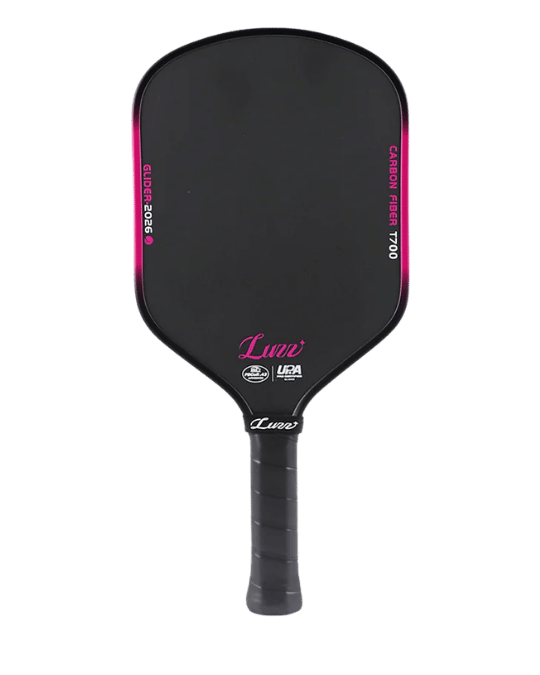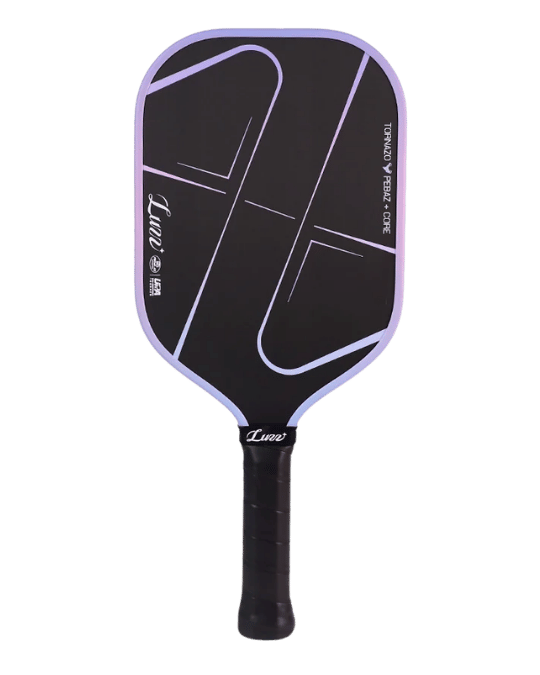
A Kevlar pickleball paddle uses aramid fibers — the same family of materials in bulletproof vests — woven into the paddle face, usually as a hybrid layer over a carbon fiber base. The aramid weave produces a distinctive yellow color on the face and a noticeably different feel from pure carbon. Kevlar paddles have become the premium spin construction, with most flagship 2025–2026 paddles offering at least one Kevlar variant.
What Kevlar Buys You
- More spin — the aramid weave is rougher than carbon and grabs the ball harder
- Longer grit life — aramid fibers resist polishing far better than carbon
- Softer feel at contact — Kevlar dampens vibration more than stiff carbon
- Better off-center forgiveness — the slightly more flexible face spreads impact across more of the surface
- Distinctive look — most Kevlar paddles show the yellow weave through the topcoat
The Trade-Offs
Kevlar is expensive — aramid fiber costs significantly more than T700 carbon, which is why most Kevlar paddles retail at the high end ($250–$300+). The softer face also means slightly less pure pop on drives compared to a pure carbon paddle at the same thickness. And the slightly muted feel can take some adjustment if you're coming from a snappy raw carbon paddle.
Kevlar vs Raw Carbon for Spin
In side-by-side testing, Kevlar paddles produce 5–15% more topspin RPM than equivalent raw carbon paddles, depending on the construction. More importantly, that spin advantage holds up over time — a Kevlar paddle at 12 months still generates close to the spin of a brand-new one, where a raw carbon paddle has noticeably faded by the same point.
Who Should Buy a Kevlar Paddle
- Players whose game depends on heavy topspin (third-shot drives, dipping topspin returns)
- Players who want their paddle to last longer before grit fades
- Players coming from tennis who like a softer, more dampened feel
- Players willing to pay a $50–100 premium for spin and durability
Bottom Line
Kevlar paddles are the premium spin pick in 2026. If you generate spin actively (heavy brush topspin, slice serves, kick returns) and you can stomach the price, Kevlar will pay off in both peak spin and how long that spin lasts.