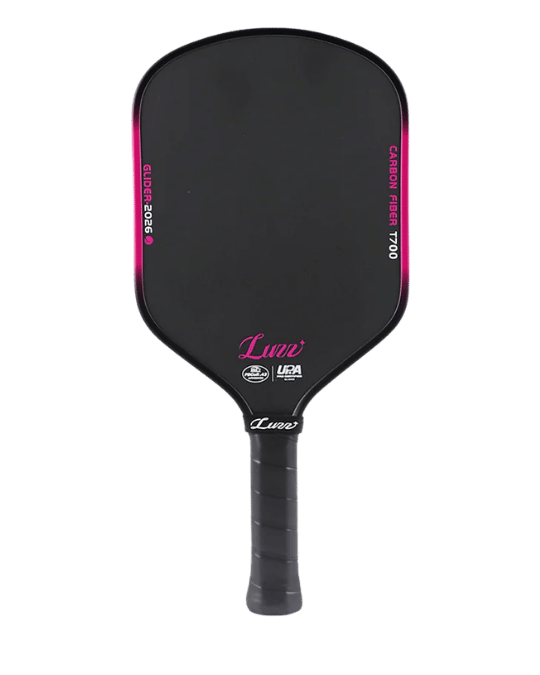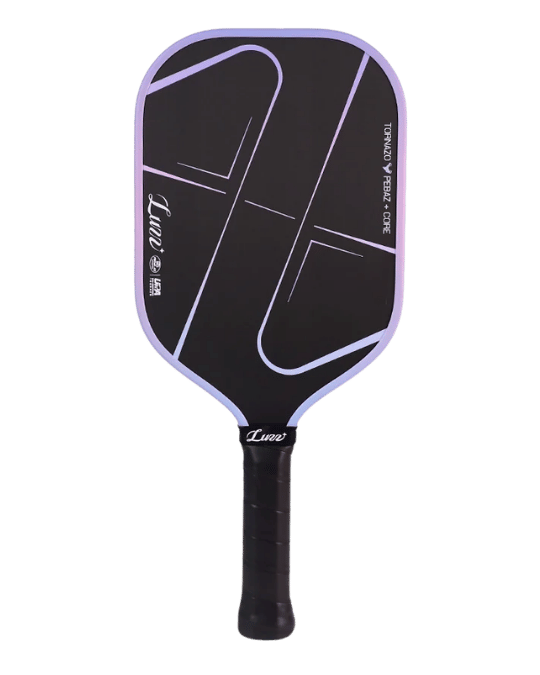
Carbon fiber has been the dominant pickleball paddle face material for years. Kevlar (technically aramid fiber) is the challenger — newer to the premium paddle market, but rapidly becoming the go-to material for players who prioritize spin and durability. The comparison is real and the trade-offs are worth understanding before you spend $250+ on a Kevlar flagship.
Side-by-Side
| Property | Raw Carbon Fiber | Kevlar (Aramid) |
|---|---|---|
| Spin generation | Strong (especially raw carbon T700) | Stronger — typically 5–15% more RPM |
| Grit lifespan | 6–12 months competitive | 18+ months — resists polishing well |
| Feel at contact | Snappy, energetic | Softer, more dampened |
| Power on drives | Slightly more (stiffer) | Slightly less (softer face) |
| Off-center forgiveness | Standard | Slightly more (softer face spreads impact) |
| Color/look | Black weave visible | Yellow weave visible through topcoat |
| Price | $130–280 | $220–320 |
Spin: Kevlar's Big Advantage
The aramid weave is rougher than carbon at a microscopic level, which generates more friction against the ball at contact. In side-by-side spin tests, Kevlar paddles consistently produce 5–15% more topspin RPM than equivalent raw carbon paddles. More importantly, that advantage holds up over time — Kevlar doesn't polish smooth the way carbon does.
Durability: Kevlar's Second Big Advantage
Raw carbon faces lose their grit gradually over 6–12 months of competitive play. Kevlar faces hold their texture far longer — many players report their Kevlar paddles still grabbing the ball well at 18+ months. The aramid fibers simply resist the polishing that wears down carbon.
Power: Carbon's Edge
The same softness that makes Kevlar gentler on the arm also makes it slightly less explosive on drives. The stiffer carbon face transmits more energy into the ball at high swing speeds. The difference isn't huge — most players couldn't blind-test it — but for pure power-focused paddles, carbon still has a small advantage.
Feel and Arm Comfort
Kevlar's softer face dampens vibration more than carbon does. Players with arm sensitivities often find Kevlar paddles easier on the elbow and shoulder over long sessions. If you've ever had tennis elbow, the softer feel can be a real selling point — not just a marketing claim.
The Price Question
Kevlar paddles typically cost $50–100 more than equivalent raw carbon paddles. For pure spin and durability, you're getting real value for that premium. For pure power on drives, carbon is still the better pick at any price. For all-court players who weigh spin and arm comfort more than top-end pop, Kevlar usually wins the value comparison.
Bottom Line
Kevlar for spin-focused players, players with arm sensitivities, or players who want their paddle to last as long as possible. Raw carbon for pure power players, players on a tighter budget, or players who specifically prefer a snappier feel. The choice maps to playing priorities more than to "better."